 StAI Flow
Training 18 of 30
Workplace violence and working alone
Hospitality Safety Training · 18 of 30
Workplace violence and working alone
10 minutes
Section 1 of 4Understand the risk
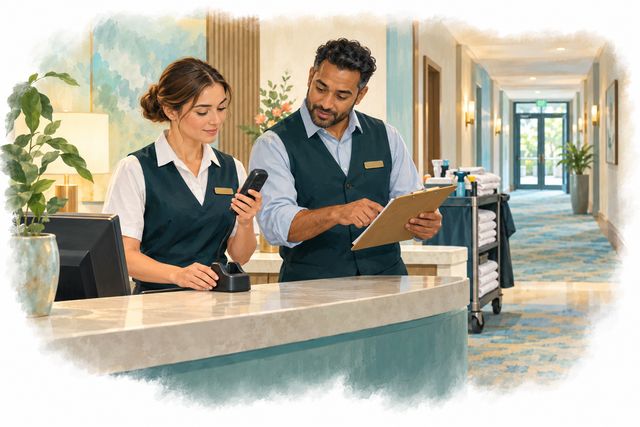
A guest blocks your doorway during room service. Would you wait for your next check-in? Room service, housekeeping, front desk, security, parking, and overnight teams may face threats or isolated work.
470 deathsU.S. workplace homicides in 2024
BLS recorded 470 occupational homicides across all U.S. industries in 2024. This is not a hotel-specific rate; it excludes nonfatal threats and harassment.
Before working alone today, verify your help method, backup, and missed-check-in responder; report any gap.
Section 2 of 4Notice warning signs
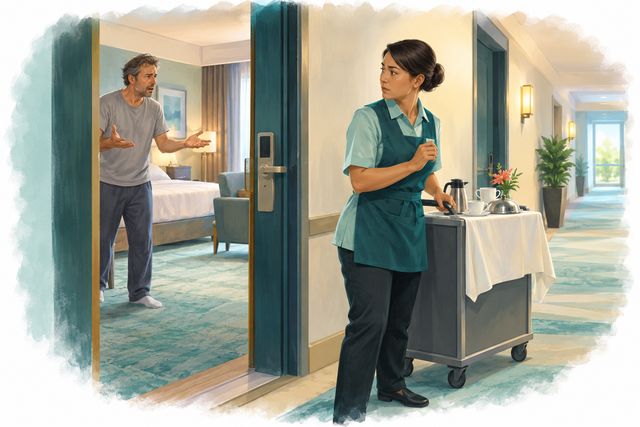
Threats, harassment, stalking, aggression or blocked exits may involve guests, coworkers, contractors or others. Guest rooms, storage, parking and overnight work can isolate staff. Dead batteries, weak signals, unclear responders or missed check-ins can defeat help systems.
Federal OSHA has no specific general workplace-violence standard; the General Duty Clause may apply to recognized serious hazards. Washington requires panic buttons and other protections for covered isolated workers; management must verify applicable state and local duties.
Section 3 of 4Choose a safer next step

- Confirm location, help method, check-ins, backup, and the missed-check-in responder before starting isolated work.
- Keep an exit; use calm short language when safe, disengage, and never chase, restrain, or recover property.
- In immediate danger, reach safety and call 911 and site help; report factual threats through normal or alternate contacts.
Safety boundary: During this activity: Recognition and escape planning only. No confrontation, physical intervention, live panic broadcasts or emergency-device drills.
Section 4 of 4Practice the decision
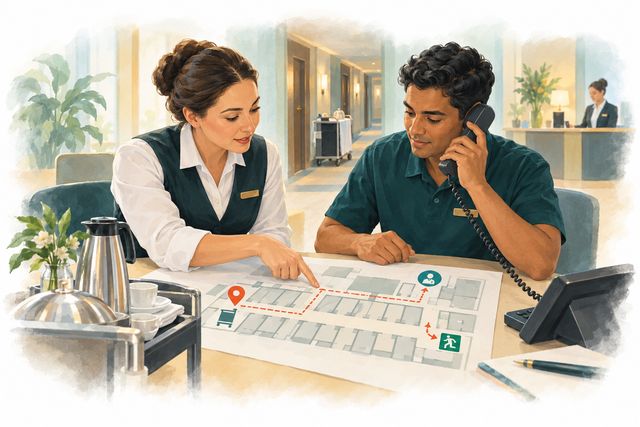
Scenario: Delivering room service alone, you face a guest blocking the doorway and making threats. Your next check-in is ten minutes away. What takes priority?
Practice activity (4 min)
- Think 30 secIdentify the risk.
- Discuss 90 secAgree a safer plan.
- Compare 1 minCheck your plan below.
- Commit 1 minChoose your next-shift action.
Learner check
Based on the scenario above, what is the safest plan? Tap to reveal the answer.
Prioritize distance and safe escape. Activate emergency/site help without waiting for the check-in; give your exact location when safe. Never confront or physically intervene.
Sources
Bonus resources
Free outside material to go deeper. These open on the publisher's site.
- Workplace Violence fact sheetOSHA · 2-page fact sheet
- Workplace Violence: Prevention ProgramsOSHA · Web page