 StAI Flow
Training 19 of 30
Heat illness prevention
Hospitality Safety Training · 19 of 30
Heat illness prevention
10 minutes

Section 1 of 4Understand the risk
Your teammate is sweating but speaking unclearly. Is a drink and one more table a safe plan? Kitchens, laundries, grounds, parking, events, aquatics, and engineering face indoor and outdoor heat.
8 oz / 15–20 minWater for moderate, short-duration work in heat
NIOSH recommends one cup every 15–20 minutes for moderate heat activity under two hours. This is guidance, not a universal fluid prescription; follow individualized medical restrictions.
Section 2 of 4Notice warning signs

Ovens, steam, dryers, humidity, heavy effort, sun and some protective clothing add heat. New and returning workers may need gradual adjustment; experience elsewhere does not prove task tolerance. Headache, nausea or weakness need attention; confusion, slurred speech, collapse or seizures mean emergency.
The federal OSHA heat standard is proposed, not current law. Existing duties and applicable state rules apply. NIOSH recommends task-specific exposure controls, rest, water, acclimatization and buddy observation.
Section 3 of 4Choose a safer next step

- Confirm water, cool recovery, relief coverage, cooling breaks, and a task-specific plan before starting work in heat.
- Stop work, help the worker cool, stay, and arrange prompt medical evaluation; severe or worsening symptoms or unavailable care: 911.
- Suspected heat stroke: call 911 and site help, stay, and cool skin and clothes with water or cold wet cloths; follow dispatchers.
Safety boundary: Never diagnose, force fluids or leave an ill worker alone. No exercise demonstration or heat-tolerance challenge during this activity; follow emergency medical directions.
Section 4 of 4Practice the decision
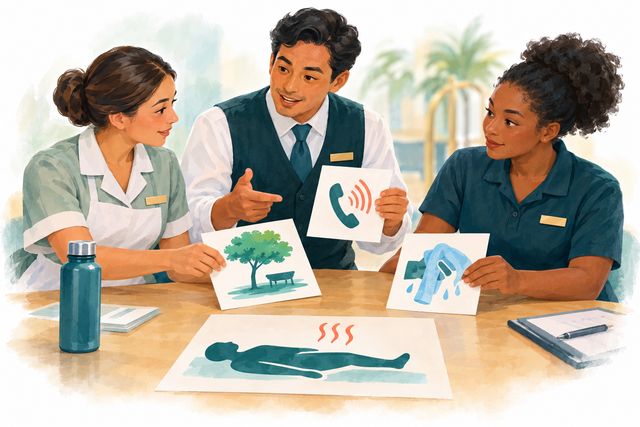
Scenario: A new employee becomes unsteady and speaks unclearly during a hot banquet reset, while still sweating. A coworker suggests water and finishing. Assign safer response roles.
Practice activity (4 min)
- Think 30 secIdentify the risk.
- Discuss 90 secAgree a safer plan.
- Compare 1 minCheck your plan below.
- Commit 1 minChoose your next-shift action.
Learner check
Based on the scenario above, what is the safest plan? Tap to reveal the answer.
Stop work, call 911/site help, stay, and cool rapidly and safely. Confusion is an emergency despite sweating; do not give drinks to a confused or unconscious person.
Sources
Bonus resources
Free outside material to go deeper. These open on the publisher's site.
- Protecting You and Your Co-workers from Heat Exposure (OSHA 3154)OSHA · 2-page QuickCard/flyer
- OSHA-NIOSH Heat Safety Tool appNIOSH (CDC) · Free mobile app