 StAI Flow
Training 20 of 30
Severe weather and utility interruptions
Hospitality Safety Training · 20 of 30
Severe weather and utility interruptions
10 minutes

Section 1 of 4Understand the risk
Thunder interrupts a patio banquet. The outdoor meeting point is exposed—where should staff and guests go? All departments need weather/outage instructions, especially outdoor events, grounds, engineering, food service, and emergency leads.
30 minutesStay sheltered after the last thunder
National Weather Service guidance: Stay in safe shelter at least 30 minutes after the last sound of thunder. This is lightning guidance, not clearance for flooding, damaged utilities, icy routes, or reopening.
Section 2 of 4Notice warning signs
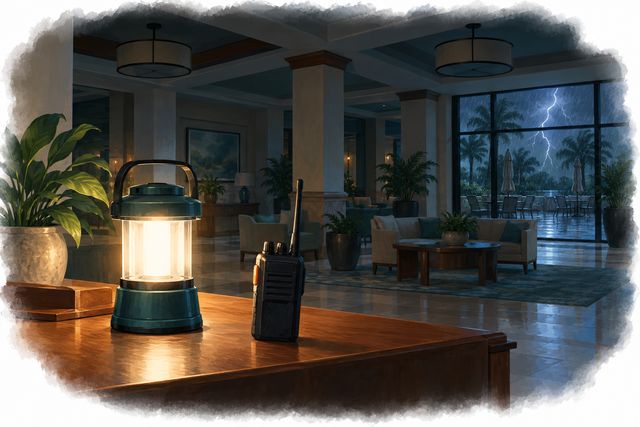
Wind, lightning, floods, debris, broken glass, snow and ice can make destinations unsafe. Outages affect lights, elevators, communications, ventilation, water and food refrigeration. Downed wires, floodwater, damaged trees and improvised fuel equipment remain dangerous afterward.
Where OSHA requires an emergency action plan, include reporting, evacuation, accountability, roles and employee preparation. Follow hazard-specific site instructions and rules. Lightning and winter advice is guidance, not universal reopening or temperature rules.
Section 3 of 4Choose a safer next step
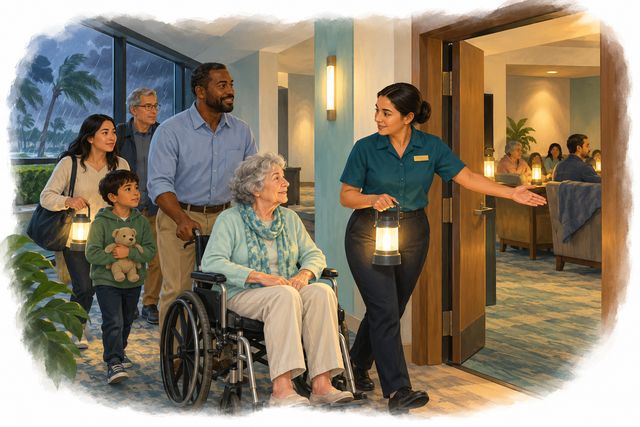
- Confirm alert lead, shelter, alternate assembly point, accessibility help, and backup communication; report urgent hazards immediately.
- Follow instructed shelter or evacuation routes; clearly direct guests and use assigned accountability and accessibility arrangements.
- Avoid wires, floodwater, and ice; call 911 for immediate danger. Only authorized specialists restore utilities or approve reopening.
Safety boundary: This activity authorizes no electrical repair, elevator rescue, flooded-area entry, roof or tree clearing, utility restoration or alarm or outage demonstration.
Section 4 of 4Practice the decision
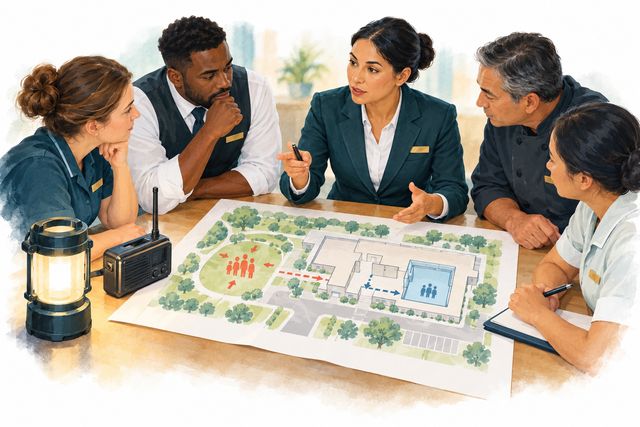
Scenario: Thunder interrupts a patio event. The usual outdoor assembly point is exposed; an outage darkens the lobby and a guest needs assistance. Who supplies safe destination instructions?
Practice activity (4 min)
- Think 30 secIdentify the risk.
- Discuss 90 secAgree a safer plan.
- Compare 1 minCheck your plan below.
- Commit 1 minChoose your next-shift action.
Learner check
Based on the scenario above, what is the safest plan? Tap to reveal the answer.
Activate the hazard-specific plan, obtain the safe destination, guide guests with planned assistance, and account for people. Avoid failed utilities; do not investigate or restore equipment.
Sources
Bonus resources
Free outside material to go deeper. These open on the publisher's site.
- Power OutagesReady.gov (FEMA) · Web page with checklist
- Lightning Safety When Working OutdoorsOSHA · Short PDF fact sheet
- Severe WeatherReady.gov (FEMA) · Web page (hub)