 StAI Flow
Training 22 of 30
Pool chemical safety boundaries
Hospitality Safety Training · 22 of 30
Pool chemical safety boundaries
10 minutes
Section 1 of 4Understand the risk
A pool-chemical delivery leaks while the operator is away. Would a housekeeping bucket and mop help—or increase danger? Aquatics, receiving, housekeeping, engineering, security, and managers need clear limits around chemical rooms and suspect deliveries.
4,535 visits/yearMedian estimated U.S. pool-chemical emergency visits
CDC estimated a median 4,535 U.S. emergency-department visits annually during 2008–2017 for pool-chemical injuries. These historical estimates include public and residential settings, not only hotels or workplace injuries.
Section 2 of 4Notice warning signs
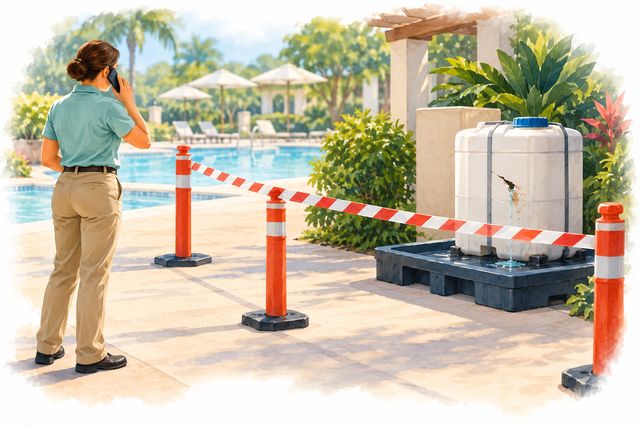
Chemicals, dirty scoops or cleaning products can react, releasing toxic gas or heat. Damaged containers, wet chemicals, dust, splashes and irritating air threaten eyes, skin and lungs. Unqualified pump changes, bypassed interlocks or recirculation faults can defeat safety controls.
Applicable OSHA Hazard Communication duties include information, accessible SDSs and training; an SDS does not authorize spill response. CDC guidance limits handling and servicing to appropriately trained personnel. Local codes, labels, SDSs and site procedures govern operations.
Section 3 of 4Choose a safer next step
- Never mix, transfer suspect products, improvise dilution, or add cleaners to equipment; leave handling to qualified operators.
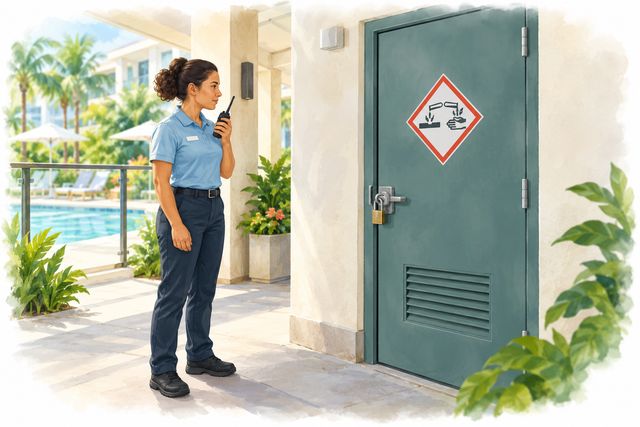
- Keep chemical and pump rooms secured, avoid suspect deliveries, and identify SDS backup access from safety.
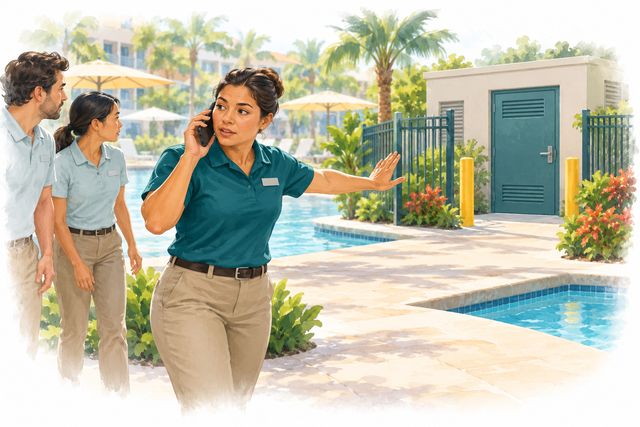
- For release or exposure, leave danger, keep others away, activate the plan, call 911 when urgent, and follow trained directions.
Safety boundary: No chemical handling, mixing, neutralizing, spill cleanup, equipment bypass, technical repair, or chemical-room entry is authorized by this activity.
Section 4 of 4Practice the decision

Scenario: A pool-chemical delivery leaks while the operator is away. A colleague offers a housekeeping mop and bucket. What can you do from safety, and what needs specialists?
Practice activity (4 min)
- Think 30 secIdentify the risk.
- Discuss 90 secAgree a safer plan.
- Compare 1 minCheck your plan below.
- Commit 1 minChoose your next-shift action.
Learner check
Based on the scenario above, what is the safest plan? Tap to reveal the answer.
Access SDSs safely and report facts. Do not transfer, mop, mix, neutralize, adjust equipment, or enter a release; qualified responders control the response.
Sources
Bonus resources
Free outside material to go deeper. These open on the publisher's site.
- Use Pool Chemicals Safely (poster)CDC · 1-page poster (PDF)
- Store Pool Chemicals Safely (poster)CDC · 1-page poster (PDF)