 StAI Flow
Training 23 of 30
Loading docks, parking and vehicle movement
Hospitality Safety Training · 23 of 30
Loading docks, parking and vehicle movement
10 minutes
Section 1 of 4Understand the risk
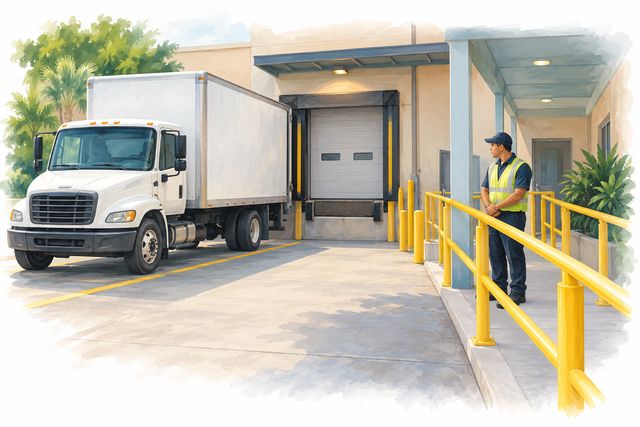
A reversing delivery truck blocks your kitchen shortcut. The driver waves—does that make squeezing behind it safe? Receiving, food service, parking, housekeeping, security, engineering, and contractors share changing dock and traffic routes.
3 yearsMaximum interval between powered-truck operator evaluations
OSHA requires powered-industrial-truck performance evaluation at least every three years. Unsafe operation, near misses, new truck types, or changed conditions can require earlier refresher training and evaluation.
Section 2 of 4Notice warning signs
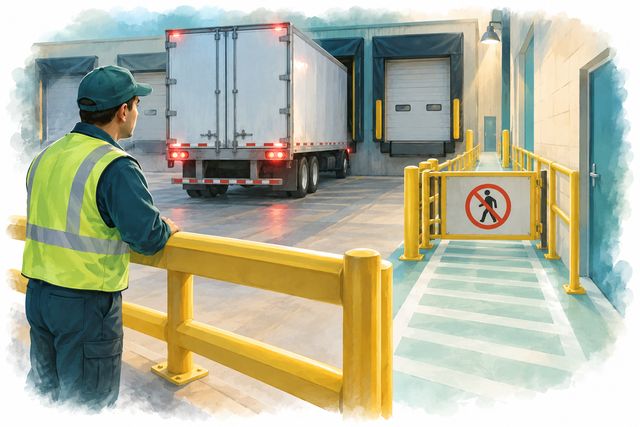
Reversing trucks, shuttles, cars and powered pallet equipment have blind spots despite alarms. Dock gaps, moving lift gates, slippery surfaces and unstable deliveries can cause falls or crushing. Closures or barriers can redirect people into traffic, squeeze zones or overhead work.
OSHA requires powered-truck training, workplace evaluation and safe operation; only trained, evaluated, authorized operators may operate. OSHA guidance supports pedestrian protection, guarded dock openings and host and contractor coordination on hazards, traffic and emergencies.
Section 3 of 4Choose a safer next step
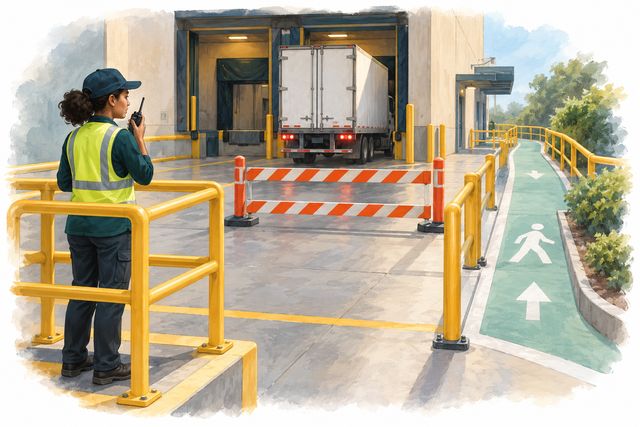
Use separated walkways. At crossings, stop; obtain positive acknowledgment under site procedures. Eye contact alone is insufficient; wait until vehicle movement is safely controlled.
Never pass behind reversing vehicles, under raised equipment, through barriers or into squeeze zones. Before unloading continues, report dock damage, spills, poor lighting or blocked routes; ask the coordinator for protected alternatives.
Safety boundary: During this activity: No live reversing demos, dock-gap entry, barrier removal, spotting or equipment operation. These require authorization and training.
Section 4 of 4Practice the decision
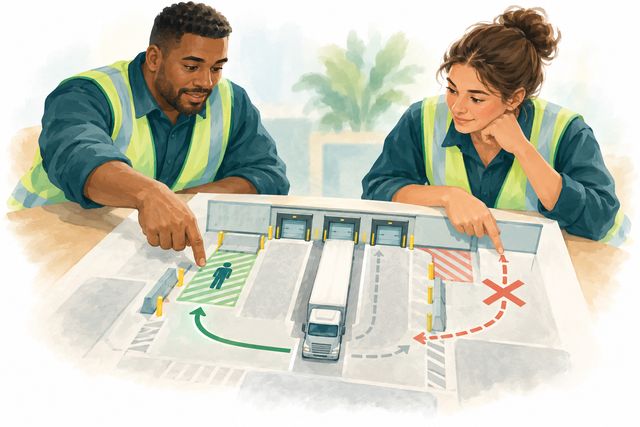
Scenario: A contractor closes the receiving walkway as a truck reverses. The driver waves; a coworker suggests squeezing behind it to reach the kitchen. Choose where to wait.
Practice activity (4 min)
- Think 30 secIdentify the risk.
- Discuss 90 secAgree a safer plan.
- Compare 1 minCheck your plan below.
- Commit 1 minChoose your next-shift action.
Learner check
Based on the scenario above, what is the safest plan? Tap to reveal the answer.
Wait in the protected area and request an approved alternative from the coordinator. Never squeeze behind reversing vehicles or breach barriers. Follow site crossing procedures.
Sources
Bonus resources
Free outside material to go deeper. These open on the publisher's site.
- Safe Forklift Operation QuickCardOSHA · QuickCard (1-page PDF)
- Powered Industrial Trucks eTool: Pedestrian TrafficOSHA · Web eTool page