 StAI Flow
Training 06 of 30
Personal protective equipment
Hospitality Safety Training · 06 of 30
Personal protective equipment
10 minutes
Section 1 of 4Understand the risk
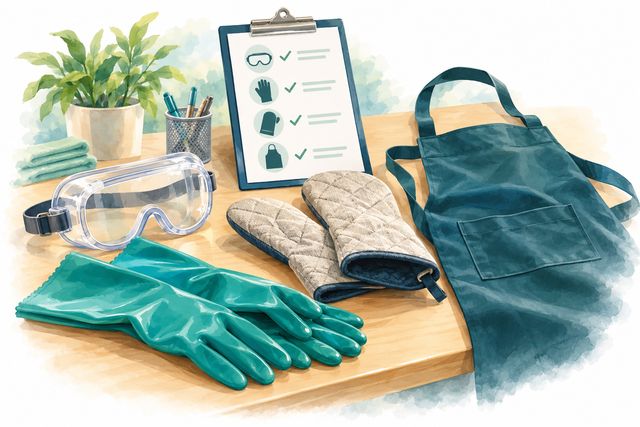
The gloves are familiar, but the cleaner is new. Are you actually protected? Splashes, hot equipment, sharp materials, and maintenance need different protection.
39,780 casesEye injuries/illnesses involving days away from work
BLS estimated 39,780 eye injury or illness cases involving days away from work among U.S. private-industry workers in 2023–2024 combined. This is a two-year total, not an annual or hotel-only count.
Section 2 of 4Notice warning signs
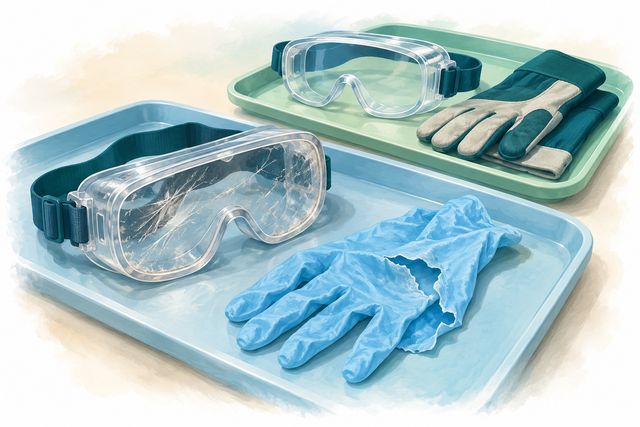
Food gloves may not resist cleaners; cut-resistant gloves may not protect against heat. Tears, poor fit, scratched lenses and incompatible PPE leave gaps. Dirty gloves transfer chemicals or germs to phones and faces.
Federal requirement: Employers assess hazards, select fitting PPE, reject defects and train workers to demonstrate correct use. Gloves must match task, conditions, exposure duration and hazards. Similar looks do not prove equal protection: material, design and rating matter.
Section 3 of 4Choose a safer next step
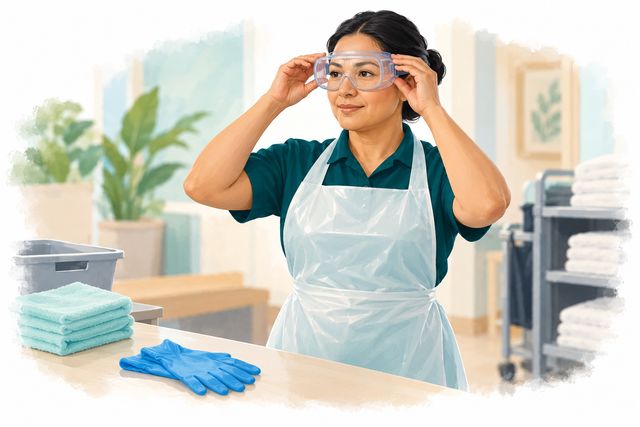
Check the task assessment and product instructions; recheck changed tasks or products. Verify fit, condition and compatibility. Stop for missing, damaged, unsuitable or uncomfortable PPE; obtain replacements.
Use trained removal and cleaning methods; protect skin and clean items, then perform hand hygiene. Required respirators need hazard-based selection, medical evaluation, a program and applicable fit testing. Disposable masks do not make fumes safe.
Safety boundary: This discussion authorizes no respirator selection, chemical response, electrical PPE use or untrained tasks.
Section 4 of 4Practice the decision
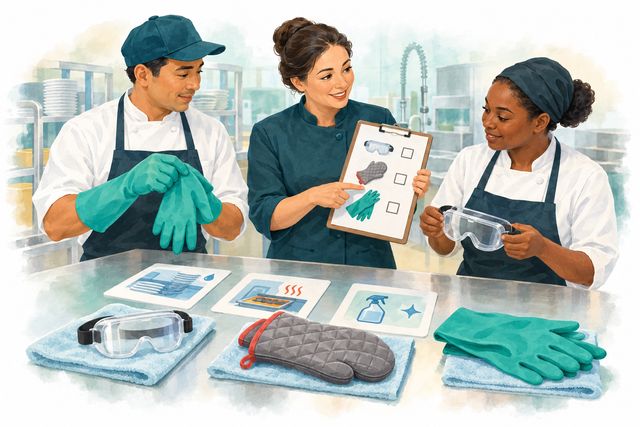
Scenario: A steward has new descaler, food-handling gloves, and scratched goggles. The machine is needed soon. A colleague suggests finishing quickly.
Practice activity (4 min)
- Think 30 secIdentify the risk.
- Discuss 90 secAgree a safer plan.
- Compare 1 minCheck your plan below.
- Commit 1 minChoose your next-shift action.
Learner check
Based on the scenario above, what is the safest plan? Tap to reveal the answer.
Pause. Verify product information and the assessment; obtain assigned gloves and eye protection, and confirm fit and training. Working quickly does not make unsuitable PPE protective.
Sources
Bonus resources
Free outside material to go deeper. These open on the publisher's site.
- Personal Protective Equipment (OSHA 3151)OSHA · PDF booklet
- Personal Protective Equipment: overviewOSHA · Web page (topic hub)