 StAI Flow
Training 07 of 30
Bloodborne pathogens and sharps
Hospitality Safety Training · 07 of 30
Bloodborne pathogens and sharps
10 minutes
Section 1 of 4Understand the risk
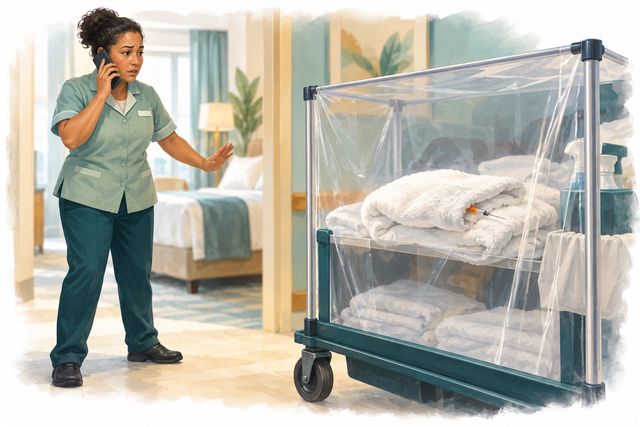
A needle is caught in a towel. What happens before anyone touches it? Cleaning, laundry, waste handling, and first aid can involve blood or sharps.
72 hoursHIV PEP must start within this window
CDC says HIV post-exposure prophylaxis must start within 72 hours after possible exposure; sooner is better. Do not wait. Report and seek medical evaluation immediately; clinicians decide treatment, including for hepatitis risks.
I will report possible exposure immediately—not at shift end.
Section 2 of 4Notice warning signs
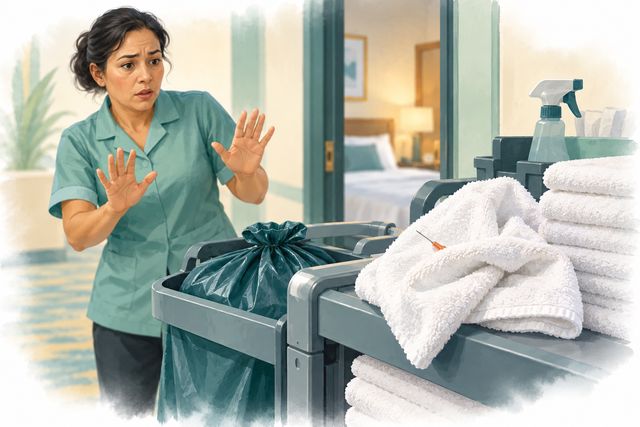
Needles, razors and contaminated glass hide in towels and bins. Compressed trash, blind reaching and shaken linen expose sharps. Blood contacting eyes, mouth, broken skin or punctures needs immediate attention.
Federal coverage depends on reasonably anticipated occupational exposure, not job title. Covered employers need exposure-control plans, preventive controls, training, vaccination offers and prompt post-exposure evaluation and follow-up.
Gloves do not make found needles safe to handle. Leave them; call the trained responder and keep others away.
Section 3 of 4Choose a safer next step
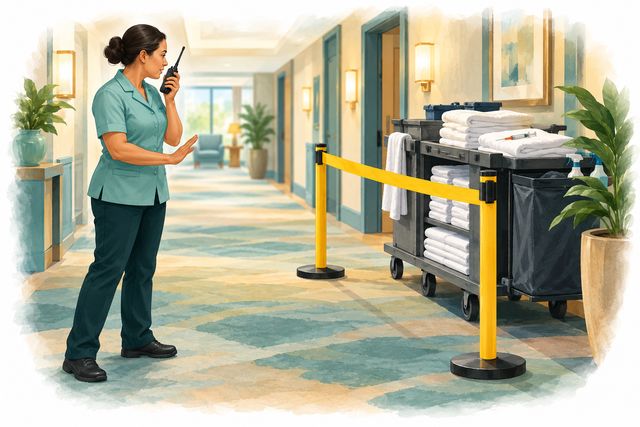
Leave sharps untouched, keep others away and report the exact location to the designated trained responder. Never pick up, recap, bend or hide found needles, compress waste or hand-search bags.
Wash needlesticks and cuts with soap and water; flush exposed eyes or mucous membranes with water. Immediately report and seek medical evaluation, even if well or more than 72 hours have passed.
Safety boundary: This discussion gives no qualification for sharps retrieval, blood cleanup, medical assessment or treatment decisions. No live calls during practice.
Section 4 of 4Practice the decision

Scenario: A needle is caught in a used towel. A colleague offers to wrap and bin it. The attendant says they may already have been stuck.
Practice activity (4 min)
- Think 30 secIdentify the risk.
- Discuss 90 secAgree a safer plan.
- Compare 1 minCheck your plan below.
- Commit 1 minChoose your next-shift action.
Learner check
Based on the scenario above, what is the safest plan? Tap to reveal the answer.
Keep the needle undisturbed and summon the responder. A possible exposure needs immediate washing or flushing, reporting, and medical evaluation while someone else protects the area.
Sources
Bonus resources
Free outside material to go deeper. These open on the publisher's site.
- Bloodborne Pathogens Standard fact sheetOSHA · 2-page fact sheet
- Hepatitis B Vaccination Protection fact sheetOSHA · 2-page fact sheet
- Bloodborne Pathogens and Needlestick Prevention: overviewOSHA · Web page (topic hub)