 StAI Flow
Training 05 of 30
Chemical labels, SDS and safe use
Hospitality Safety Training · 05 of 30
Chemical labels, SDS and safe use
10 minutes
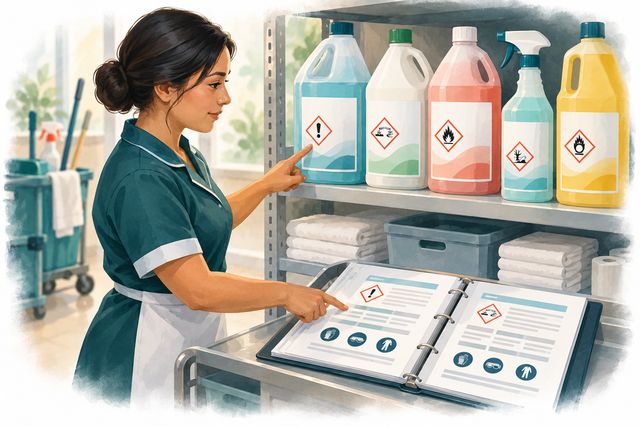
Section 1 of 4Understand the risk
An unlabeled blue bottle appears. Is “probably glass cleaner” enough information? Cleaning products can harm hotel workers’ skin, eyes, and lungs.
440 casesCleaning-chemical inhalation injuries in Washington
A 2026 study identified 440 cleaning-chemical toxic-inhalation injury claims in Washington State workers’ compensation records, July 2017–June 2022. Workers came from multiple industries; this is not a national or hotel-only total.
If I cannot verify the product and safe method, I will pause rather than guess.
Section 2 of 4Notice warning signs
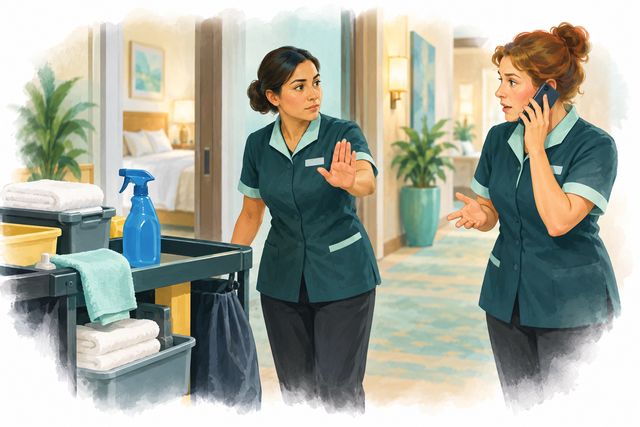
Unidentified bottles or mismatched SDS lead to wrong precautions. Mixing cleaners, including bleach with ammonia, can release dangerous gases. Concentrates, sprays, splashes, and poor airflow threaten health.
Federal requirement: Hazard communication includes applicable labeling, accessible safety data sheets, a written program, and effective training.
Federal requirement: Train at initial assignment and for new chemical hazards; SDS access alone is insufficient.
Myth check: Can you identify an unknown cleaner by smelling it?
No. Keep it out of use and report it without opening or sniffing.
Section 3 of 4Choose a safer next step
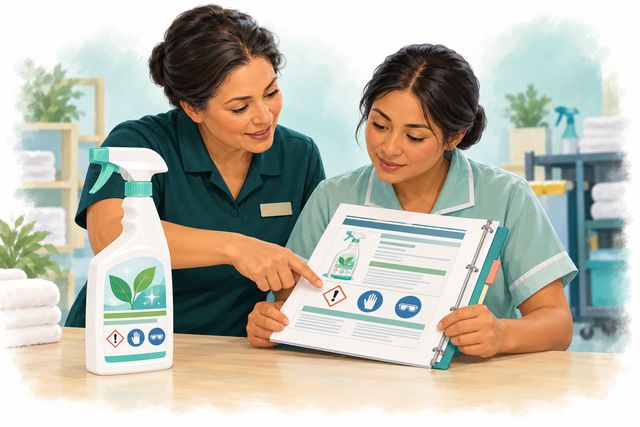
Match the exact label and SDS. Stop if identity, instructions, training or protection is missing. For electronic SDS failure, use the accessible backup and ask the supervisor.
Follow approved dispensing, dilution, ventilation and containers. Never mix cleaners, top up unknown bottles or use drink containers. For fumes or symptoms, leave, warn others and activate emergency response; never sniff.
Safety boundary: Discussion only: No opening, mixing, spraying, neutralizing, dilution or uncontrolled-spill cleanup. Never delay emergency care for paperwork.
Section 4 of 4Practice the decision
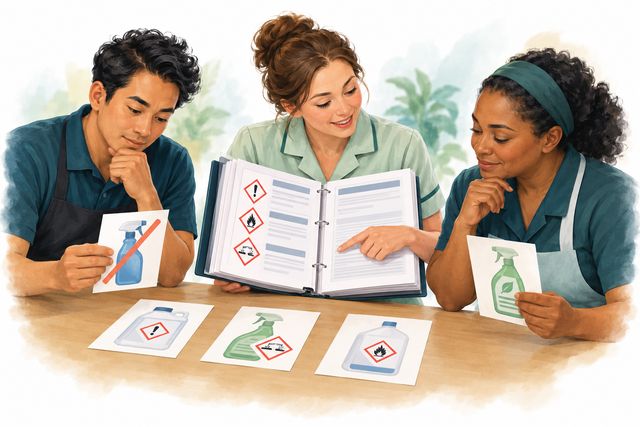
Scenario: An unlabeled blue bottle appears on a cart. Someone guesses “glass cleaner.” What verified information would you need before using any product?
Practice activity (4 min)
- Think 30 secIdentify the risk.
- Discuss 90 secAgree a safer plan.
- Compare 1 minCheck your plan below.
- Commit 1 minChoose your next-shift action.
Learner check
Based on the scenario above, what is the safest plan? Tap to reveal the answer.
Keep the unknown bottle out of use and report it. Match approved products to labels and SDS; follow trained instructions. Never guess identity, dilution, or protection.
Sources
Bonus resources
Free outside material to go deeper. These open on the publisher's site.
- Hazard Communication Standard Pictogram QuickCardOSHA · QuickCard (2-page PDF)
- Hazard Communication Standard Labels QuickCardOSHA · QuickCard (2-page PDF)
- Hazard Communication Standard: Safety Data Sheets (brief)OSHA · Short PDF brief