 StAI Flow
Training 14 of 30
Machine guarding and lockout awareness
Hospitality Safety Training · 14 of 30
Machine guarding and lockout awareness
10 minutes
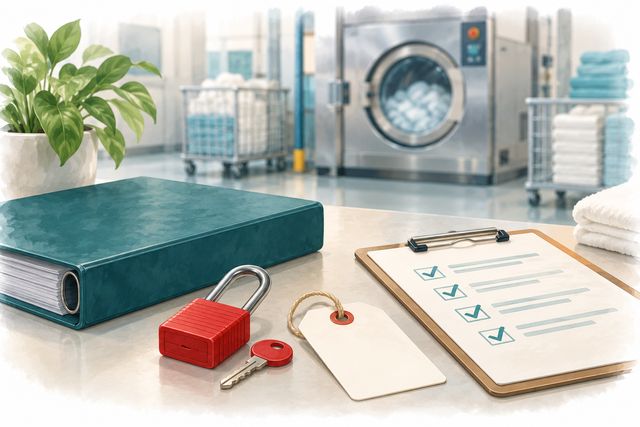
Section 1 of 4Understand the risk
A technician steps away from a tagged conveyor. Who can authorize restart? Laundry, kitchens, stewarding and housekeeping staff must recognize guarding and contractor energy-control restrictions.
1 yearEnergy-control procedure inspection at least annually
OSHA requires covered energy-control procedure inspection at least annually by an authorized employee other than those using it. This employer requirement never qualifies an attendant to service equipment, inspect procedures or remove another worker’s lock.
Section 2 of 4Notice warning signs
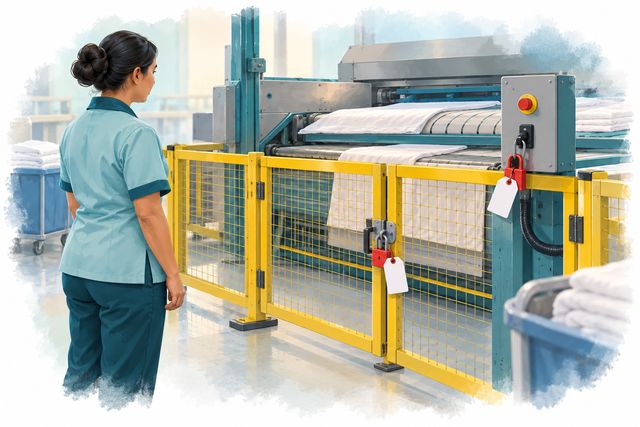
Jams or cleaning tempt reaching into mixers, slicers, compactors or conveyors. Missing guards, defeated interlocks or stored energy make stopped machines dangerous. Crossed barriers, removed tags and informal restarts endanger servicing workers.
Federal requirement: Feeding tools cannot replace required guards. Covered servicing requires hazardous-energy control; authorized and affected roles differ, and employers must coordinate contractor procedures.
STOP is not isolation: restart and stored energy can remain. Never remove another worker’s lock on informal instructions.
Section 3 of 4Choose a safer next step
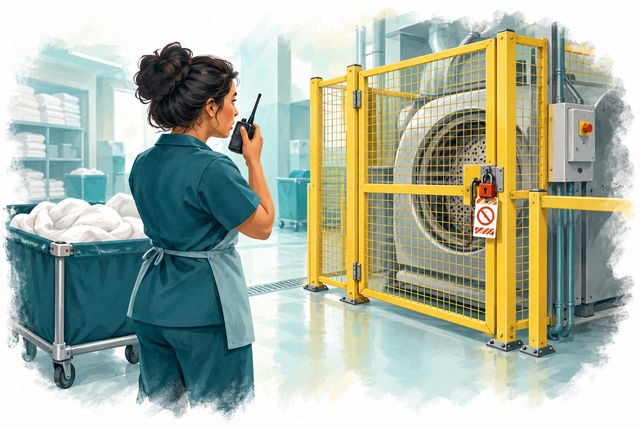
Operate only with required training, authorization and age eligibility. Report guard or interlock faults before use. For jams or cleaning exposing danger zones, stop; obtain machine-specific procedures and authorized help. Never reach in.
Leave locks, tags and barriers alone. Keep equipment unused until authorized release, communication, restored guards and return-to-service handoff.
Safety boundary: Affected-worker awareness only: During this activity, do not touch equipment, guards, locks or tags. No servicing permission or authorized-employee lockout qualification.
Section 4 of 4Practice the decision

Scenario: A contractor is servicing a stopped, tagged laundry conveyor. Nobody is visible. A supervisor requests one urgent load. How should the attendant respond?
Practice activity (4 min)
- Think 30 secIdentify the risk.
- Discuss 90 secAgree a safer plan.
- Compare 1 minCheck your plan below.
- Commit 1 minChoose your next-shift action.
Learner check
Based on the scenario above, what is the safest plan? Tap to reveal the answer.
Keep equipment unused and the zone protected. Contact the coordinator and follow the authorized energy-control release and notification process. Never infer permission from silence or an absent technician.
Sources
Bonus resources
Free outside material to go deeper. These open on the publisher's site.
- Lockout/Tagout fact sheet (FS-3529)OSHA · 2-page fact sheet
- Machine Guarding eToolOSHA · Interactive web eTool
- Preventing Cuts and Amputations from Food Slicers and Meat GrindersOSHA · 3-page fact sheet