 StAI Flow
Training 13 of 30
Electrical safety
Hospitality Safety Training · 13 of 30
Electrical safety
10 minutes
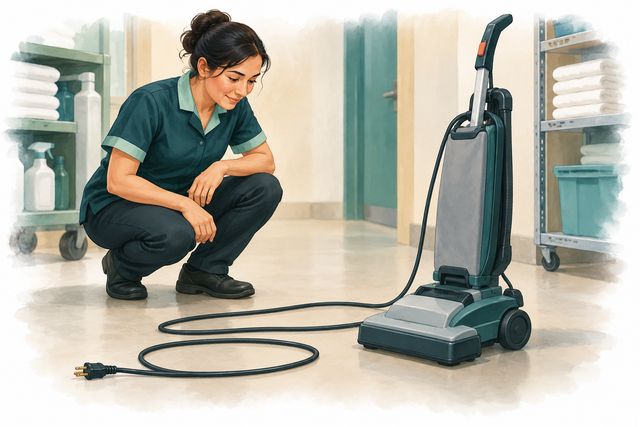
Section 1 of 4Understand the risk
The vacuum runs with a crushed cord. Would you use it for one more room? Housekeeping, kitchens and engineering coordinators encounter cords, wet cleaning and contractor electrical work zones.
1 shiftInspection before use on each shift
OSHA requires covered portable cord-and-plug equipment and extension cords to receive visual inspection before use on any shift. Equipment remaining connected and protected from damage need not receive that inspection until relocated. Follow the site’s inspection process.
Section 2 of 4Notice warning signs
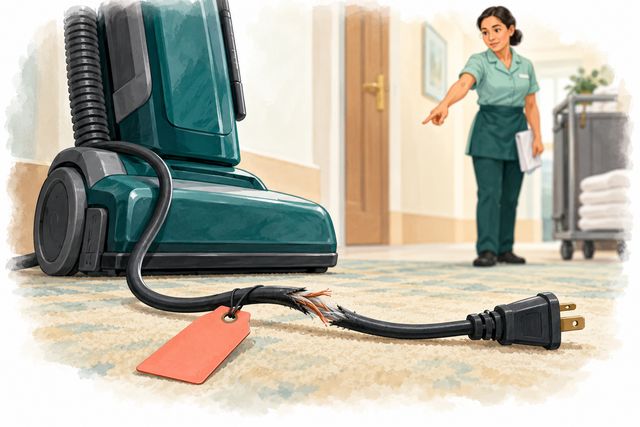
Frayed insulation, loose plugs, missing ground pins and damaged receptacles can cause shock or burns. Wet connections, sparks, burning smells or repeated trips need authorized attention. Crossing contractor barriers or using improvised adapters adds danger.
Federal requirement: Remove damaged equipment from use when injury could result; only qualified people may test circuits or equipment. Preserve grounding, never handle energized plugs with wet hands or repeatedly reset tripped protective devices.
Section 3 of 4Choose a safer next step
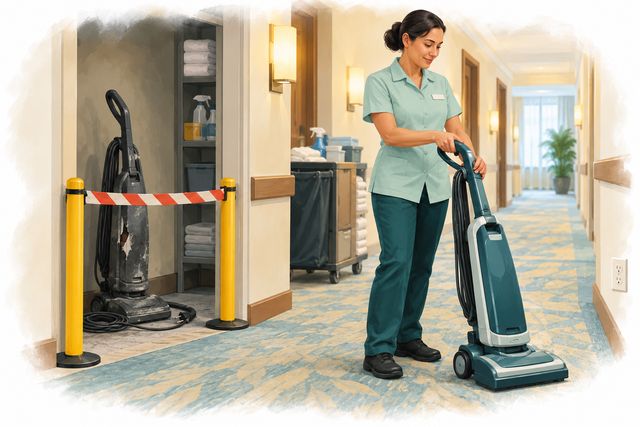
- Perform the required visual check without opening covers or touching suspect parts. Report defects and keep unsafe equipment unused.
- Keep cords away from wheels, heat, liquid and pinching. Avoid taped repairs or pulling equipment by its cord.
- Avoid wet or sparking connections, including reaching through danger to unplug. Respect barriers and request an approved safe alternative.
Safety boundary: During this activity: No equipment handling, voltage tests, panel opening, fault resets, cord repairs or electrical-zone entry. It grants no electrical qualification.
Section 4 of 4Practice the decision
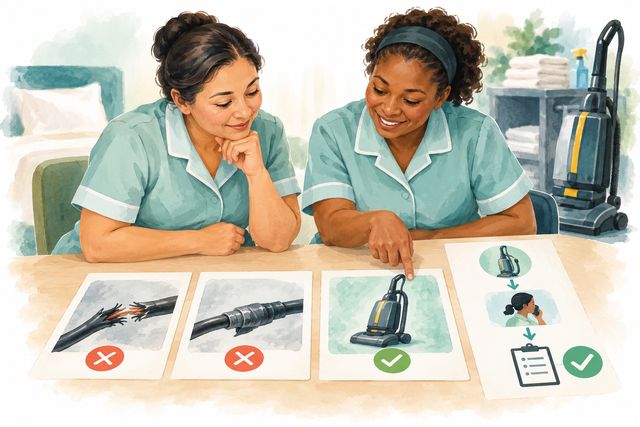
Scenario: A vacuum cord has damaged insulation. A contractor blocked the usual outlet. A colleague offers tape and an adapter. How should staff continue safely?
Practice activity (4 min)
- Think 30 secIdentify the risk.
- Discuss 90 secAgree a safer plan.
- Compare 1 minCheck your plan below.
- Commit 1 minChoose your next-shift action.
Learner check
Based on the scenario above, what is the safest plan? Tap to reveal the answer.
Keep the damaged vacuum unused and stay outside the barrier. Report conditions and location, protect others from reuse, and obtain an approved safe alternative through the site contact.
Sources
Bonus resources
Free outside material to go deeper. These open on the publisher's site.
- Electrical Safety QuickCardOSHA · QuickCard (1-page PDF)
- Workplace Safety resourcesElectrical Safety Foundation International (ESFI, nonprofit) · Web page (free tip sheets, infographics)