 StAI Flow
Training 24 of 30
Carbon monoxide awareness
Hospitality Safety Training · 24 of 30
Carbon monoxide awareness
10 minutes
Section 1 of 4Understand the risk
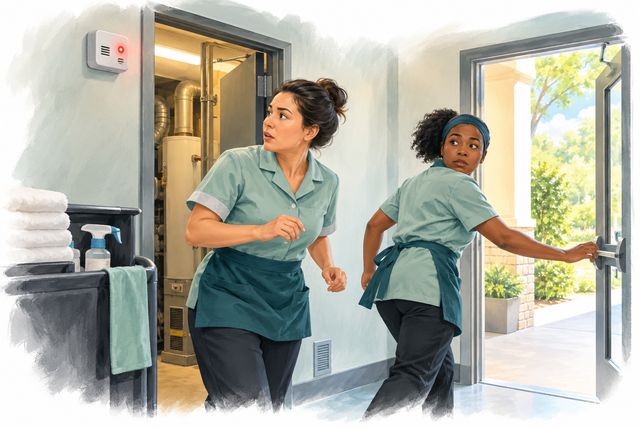
Two housekeepers have headaches near a boiler room and a CO alarm sounds. Reset it—or leave? Engineering, housekeeping, kitchens, grounds, parking, and security may encounter combustion equipment or exhaust.
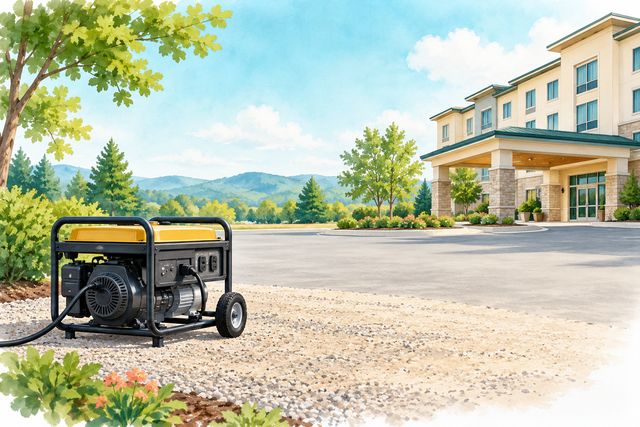
At least 20 ftGasoline engines away from building openings
NIOSH recommends gasoline engines outdoors, at least 20 feet from building openings. Prevent exhaust entering doors, windows, garages, or intakes. This guidance does not authorize equipment placement or operation without qualified planning. Twenty feet alone cannot guarantee safety.
Section 2 of 4Notice warning signs
Boilers, heaters, cooking equipment, generators, vehicles and engine tools can produce CO. Garages, utility rooms or guest spaces and partly enclosed patios can receive exhaust without visible smoke. Headache, dizziness, nausea, weakness, confusion or collapse, especially in several people, may signal exposure.
NIOSH: CO is colorless, odorless and toxic; relevant workplaces need exposure controls, monitoring and education. Never run portable generators indoors or in enclosed spaces, even with doors or windows open. Detector installation and inspection duties vary by code.
Section 3 of 4Choose a safer next step

For alarms or suspected exposure, leave safely for outdoor fresh air; warn others without delaying escape. Call 911 and site help outside: report suspected CO, exact location, symptoms and missing people.
Account at the safe meeting point; await responder clearance. Never attempt unprotected rescue. Feeling better outside does not rule out exposure; seek emergency medical guidance and disclose suspected CO.
Safety boundary: This discussion grants no alarm reset, gas or boiler repair, air testing, rescue entry, equipment placement or reoccupation authority. No live calls during practice.
Section 4 of 4Practice the decision

Scenario: Two housekeepers have headaches near a utility room; a CO alarm sounds. A colleague proposes resetting it and checking the boiler. Replace that plan with an outside call.
Practice activity (4 min)
- Think 30 secIdentify the risk.
- Discuss 90 secAgree a safer plan.
- Compare 1 minCheck your plan below.
- Commit 1 minChoose your next-shift action.
Learner check
Based on the scenario above, what is the safest plan? Tap to reveal the answer.
Leave, call 911/site help from outside, account for people, and identify anyone missing. Stay out until responders grant clearance. Never reset or investigate first.
Sources
Bonus resources
Free outside material to go deeper. These open on the publisher's site.
- Carbon Monoxide (CO) Poisoning Fact SheetCDC · One-page fact sheet
- Carbon Monoxide Poisoning fact sheetOSHA · Short PDF fact sheet
- When the Power Goes Out, Keep Your Generator OutsideCDC · 1-page flyer (PDF)