 StAI Flow
Training 02 of 30
Lifting, carrying and carts
Hospitality Safety Training · 02 of 30
Lifting, carrying and carts
10 minutes
Section 1 of 4Understand the risk
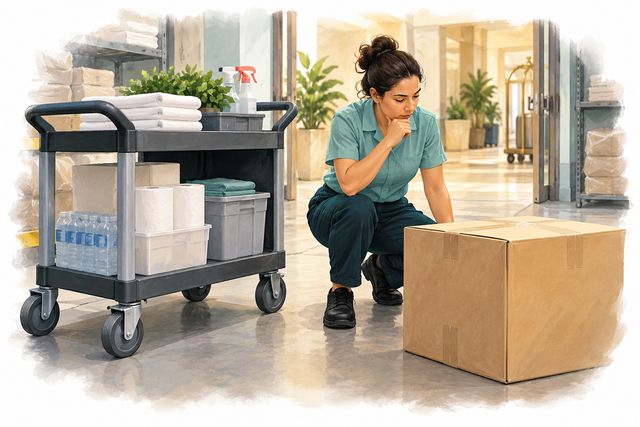
The event starts soon, but this delivery feels awkward. Is another person enough? Linen, luggage, drink cases, banquet supplies, and carts need planned moves.
51 lb / 23 kgNIOSH load constant—not a safe-weight promise
The lifting equation’s starting value assumes ideal two-handed conditions—not a universal safe or legal limit. Reach, twisting, repetition, grip, and other task factors reduce recommended weight. Team lifting does not double it.
Section 2 of 4Notice warning signs
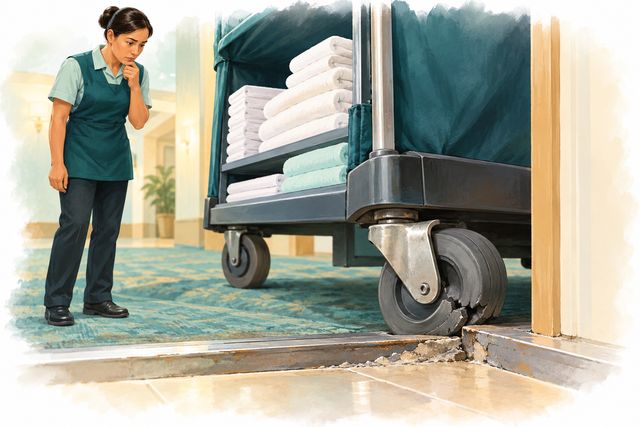
Wet linen and bulky luggage can shift, lack grips, or weigh more than expected. Twisting or reaching across carts increases effort, even with lighter items. Jammed wheels, thresholds, slopes, and tall stacks reduce control and visibility.
Federal context: OSHA sets no universal lifting weight limit; load, task, route, equipment, and worker needs matter.
Guidance: Use aids and smaller loads; follow equipment ratings and assessed handling methods.
Myth check: Does a team lift double a safe weight?
No. Team handling needs its own assessment, coordination, space, and control.
Section 3 of 4Choose a safer next step
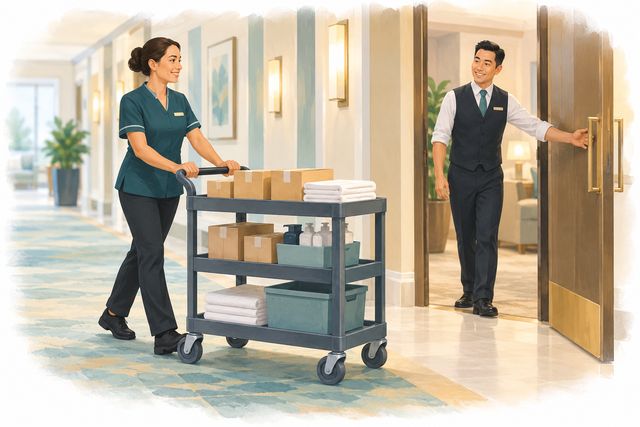
- Confirm load information, destination, and route. Choose smaller loads or suitable equipment before moving anything.
- Inspect wheels and handles; keep loads stable and below sightlines. Push when equipment and route allow safe control.
- Stop for shifting loads, jammed wheels, or pain. Request assessment rather than jerking, catching, or forcing.
Safety boundary: This activity authorizes no lifting challenges, heavy demonstrations, powered-equipment use, furniture moves or cart repairs. Never stop a runaway load with your body.
Section 4 of 4Practice the decision
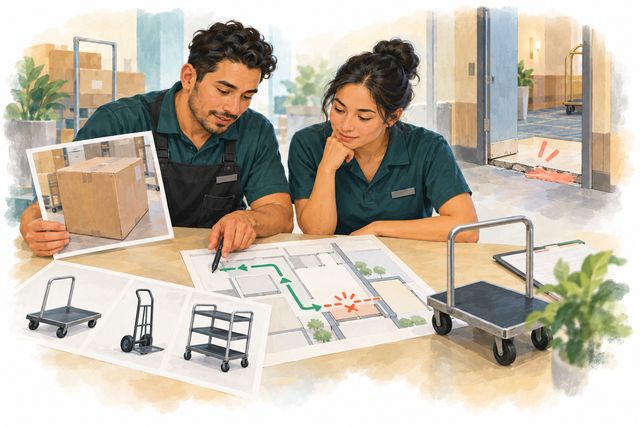
Scenario: Receiving has a bulky case with unknown weight. The route crosses a damaged threshold. A colleague suggests a quick two-person carry before the event.
Practice activity (4 min)
- Think 30 secIdentify the risk.
- Discuss 90 secAgree a safer plan.
- Compare 1 minCheck your plan below.
- Commit 1 minChoose your next-shift action.
Learner check
Based on the scenario above, what is the safest plan? Tap to reveal the answer.
Verify the load, correct or avoid the threshold, and select equipment or an assessed team method. Another person cannot fix poor grip, blocked visibility, or an unsafe route.
Sources
Bonus resources
Free outside material to go deeper. These open on the publisher's site.
- How to Use the NLE Calc App to Help Prevent Back InjuriesNIOSH (CDC) · Short article + free mobile app
- Ergonomic Guidelines for Manual Material HandlingNIOSH (CDC) · PDF guide with illustrated solutions