 StAI Flow
Training 01 of 30
Slips, trips and falls
Hospitality Safety Training · 01 of 30
Slips, trips and falls
10 minutes
Section 1 of 4Understand the risk
Rainwater spreads beyond the lobby mat as a guest arrives. How will you protect them? Entrances, kitchens, laundry rooms, and service corridors change throughout a shift.
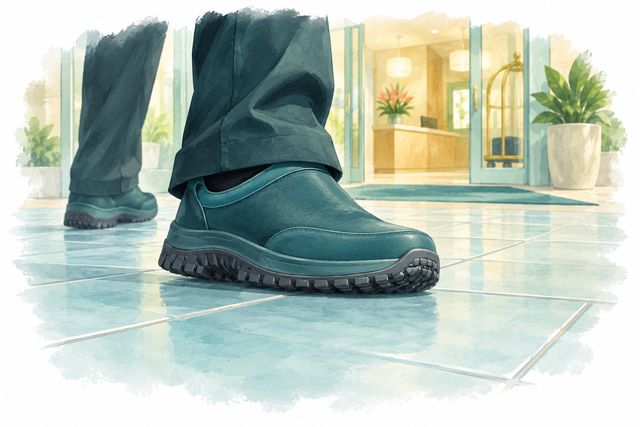
67% fewerSlip-injury claims in a footwear study
A 2019 NIOSH study of about 17,000 U.S. school-food-service workers found a 67% reduction after highly rated slip-resistant shoes were provided free. This is not a hotel injury estimate or a guarantee; safe floors still matter.
Section 2 of 4Notice warning signs
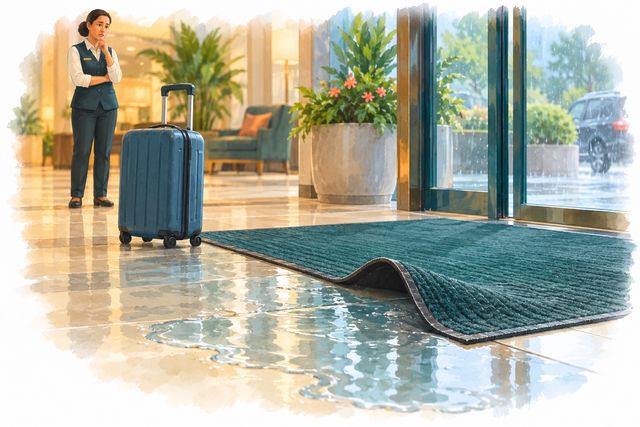
Water or grease can make a clean-looking floor slippery. Curled mats, cords, luggage, and poor lighting turn familiar routes into trip hazards. Rushing with trays or tall cart loads hides the next step.
Federal requirement: Keep walking surfaces orderly, inspect regularly, and correct hazards before people use the area.
Federal requirement: Guard hazards against use until corrected; a cone alone may not prevent access.
Myth check: Does slip-resistant footwear make grease safe?
No. It reduces risk but does not replace guarding and cleanup.
Section 3 of 4Choose a safer next step
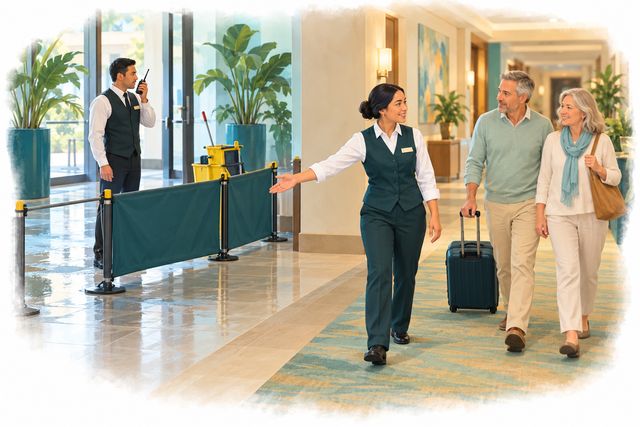
- Warn people from a safe position; use approved barriers without blocking required exits.
- Call the responder. Clean routine spills only when trained and equipped; leave unknown liquids alone.
- Keep protection until the surface and route are safe. Report recurring leaks, damaged mats, and near misses.
Safety boundary: During this activity, do not create spills or attempt structural repairs. At work, never cross barriers, enter unsafe floors, or touch or smell unknown liquids.
Section 4 of 4Practice the decision

Scenario: Rainwater spreads beyond the entrance mat. A contractor closed the alternate corridor. A banquet colleague approaches with a full tray: “A cone is enough.”
Practice activity (4 min)
- Think 30 secIdentify the risk.
- Discuss 90 secAgree a safer plan.
- Compare 1 minCheck your plan below.
- Commit 1 minChoose your next-shift action.
Learner check
Based on the scenario above, what is the safest plan? Tap to reveal the answer.
Protect approaches without blocking exits; arrange cleanup and a verified alternate route. Never cross contractor closures. Warnings are not repairs, and shoes do not replace safe floors.
Sources
Bonus resources
Free outside material to go deeper. These open on the publisher's site.
- Slip, Trip, and Fall Prevention for Healthcare WorkersNIOSH (CDC) · PDF guide with hazard checklists
- Walking-Working Surfaces: overviewOSHA · Web page (topic hub)