 StAI Flow
Training 03 of 30
Housekeeping ergonomics
Hospitality Safety Training · 03 of 30
Housekeeping ergonomics
10 minutes
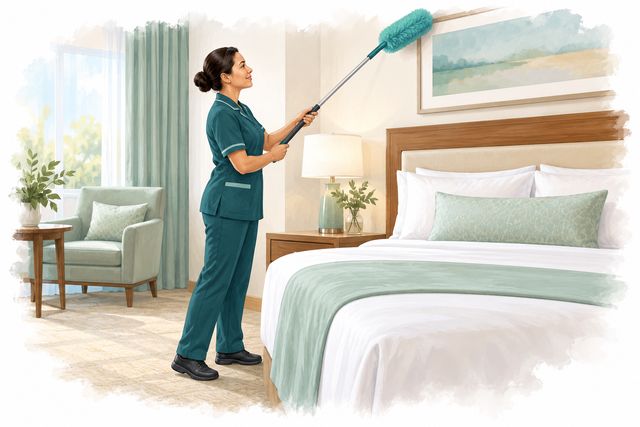
Section 1 of 4Understand the risk
Your wrist tingles, and the long-handled brush is broken. Push through or change the job? Bed making, tub cleaning, vacuuming, and linen handling build strain.
3.2 injuriesPer 100 housekeeper-years in one study
A study published in 2010 examined 2003–2005 records from 50 unionized U.S. hotels. Housekeepers had 3.2 musculoskeletal injuries per 100 worker-years—the highest musculoskeletal-injury rate of any job group studied. This historical sample is not a current national hotel rate.
Section 2 of 4Notice warning signs
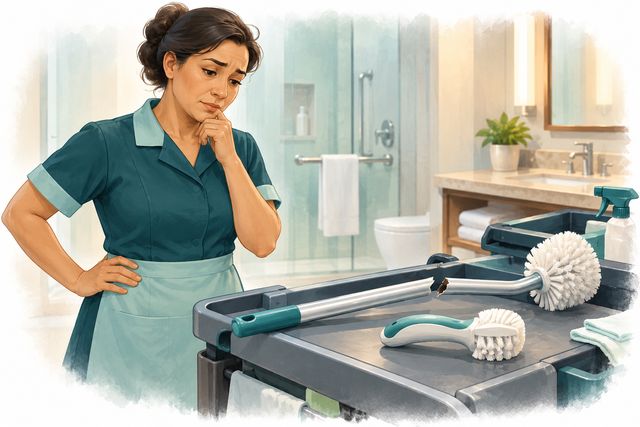
Reaching across beds combines bending, twisting, and forceful mattress handling. Short brushes, stiff triggers, and poor grips strain hands, shoulders, and backs. High work rates and too little recovery keep demanding movements repeating.
Guidance: Improve tools, layout, and workflow to reduce force, repetition, and awkward postures; coaching alone is insufficient.
California requirement: Covered lodging employers need housekeeping injury-prevention programs with worker participation, evaluation, controls, and training—not a nationwide rule.
Section 3 of 4Choose a safer next step
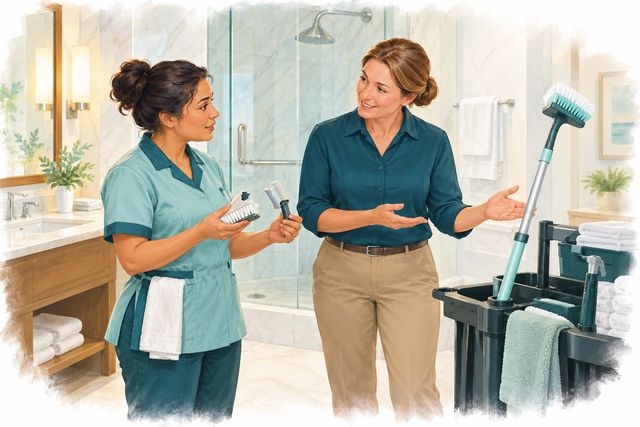
- Move around beds when access allows; use approved extended-reach tools instead of stretching across or scrubbing harder.
- Request functioning tools and assessment of layout, workload, and recovery. Use approved methods; never improvise furniture moves.
- Report pain, tingling, weakness, or difficult tasks promptly. Help evaluate whether changes actually reduce strain.
Safety boundary: Do not demonstrate painful movements, prescribe exercises or treatment, or move mattresses and heavy furniture during this discussion.
Section 4 of 4Practice the decision
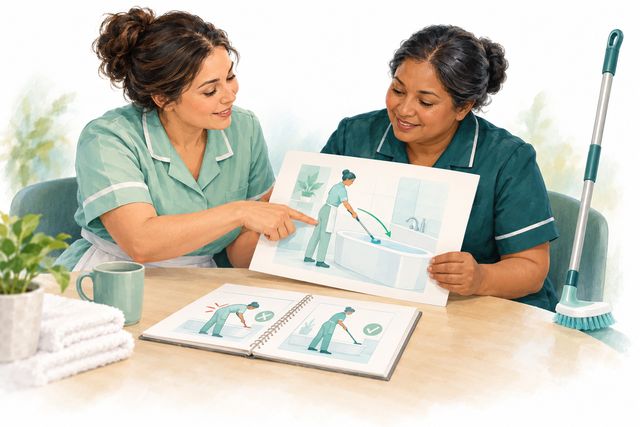
Scenario: A broken long-handled brush means scrubbing tubs with a short brush. The attendant’s wrist tingles. A colleague suggests stretching and working faster.
Practice activity (4 min)
- Think 30 secIdentify the risk.
- Discuss 90 secAgree a safer plan.
- Compare 1 minCheck your plan below.
- Commit 1 minChoose your next-shift action.
Learner check
Based on the scenario above, what is the safest plan? Tap to reveal the answer.
Report symptoms, replace the unsuitable tool, and review work organization. Check results with the worker. Stretching or switching between equally demanding tasks does not solve the exposure.
Sources
Bonus resources
Free outside material to go deeper. These open on the publisher's site.
- Preventing Musculoskeletal Injuries in Housekeepers (fact sheet)Cal/OSHA (California DIR) · 2-page fact sheet
- The Employer's Hotel Housekeeper Musculoskeletal Injury Prevention ProgramCal/OSHA (California DIR) · 2-page fact sheet