 StAI Flow
Training 09 of 30
Knives, cuts and broken glass
Hospitality Safety Training · 09 of 30
Knives, cuts and broken glass
10 minutes
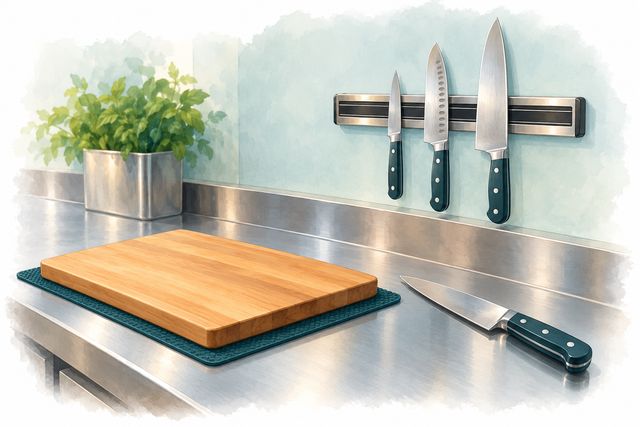
Section 1 of 4Understand the risk
The ice bin is full, the next banquet starts soon, and a glass just shattered. What happens now? Kitchen, bar, banquet, stewarding, and housekeeping teams all meet sharp objects during ordinary work.
Under 18Power-driven meat slicers are off limits
Federal child-labor rules prohibit workers under 18 from operating or cleaning power-driven meat slicers, even when slicing cheese or vegetables. This is not a minimum-age rule for every hand knife; adults still need task-specific training.
Section 2 of 4Notice warning signs
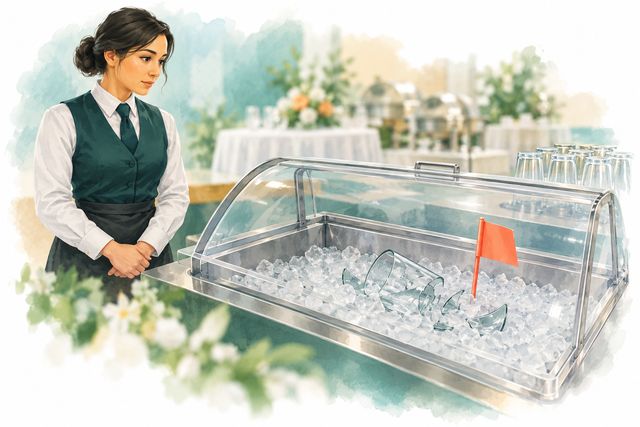
A knife disappearing under suds or towels. A loose board, rushed cut, or hand reaching for a falling blade. Glass fragments in ice, food, linen, or a waste bag.
Use the right knife, a stable cutting surface, and task-selected hand protection. Cut-resistant does not mean cut-proof.
Keep knives visible in their designated storage and washing location, never hidden in sink water or linen.
Myth check: Does a cut-resistant glove make catching a knife safe?
No. Let it fall; gloves do not remove the cutting hazard.
Section 3 of 4Choose a safer next step
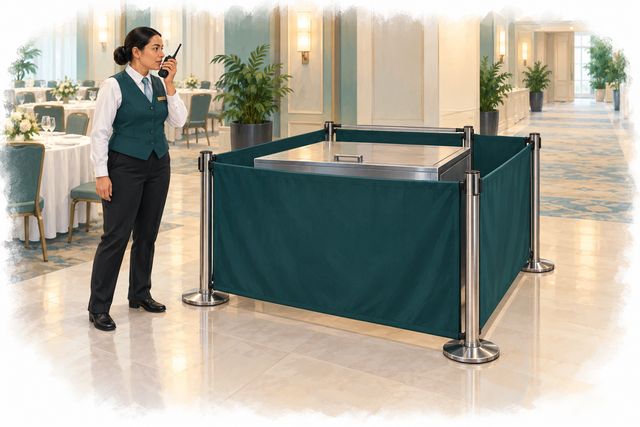
- Stop cutting before turning to answer someone. Secure the knife; let a falling blade fall.
- Keep people away from broken glass. Use approved collection tools and the designated disposal container, never bare hands.
- Stop serving potentially contaminated ice or food. Notify the food-safety lead and follow the approved disposal and cleanup process.
Safety boundary: No real blades, glass handling, machine disassembly, or sharpening during this activity. Found needles require the separate sharps response.
Section 4 of 4Practice the decision
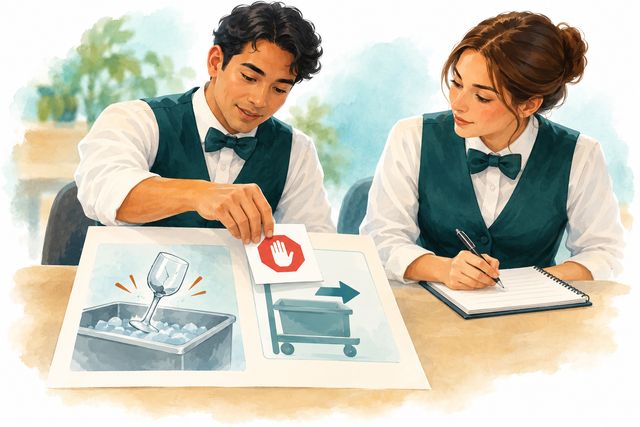
Scenario: A glass breaks over the banquet ice bin. One teammate wants to scoop out visible pieces; another reaches toward the fragments. Guests are waiting for drinks.
Practice activity (4 min)
- Think 30 secIdentify the risk.
- Discuss 90 secAgree a safer plan.
- Compare 1 minCheck your plan below.
- Commit 1 minChoose your next-shift action.
Learner check
Based on the scenario above, what is the safest plan? Tap to reveal the answer.
Keep people away, stop serving affected ice, notify the food-safety lead, and use the approved disposal and cleanup process. Removing visible pieces does not establish safety.
Sources
Bonus resources
Free outside material to go deeper. These open on the publisher's site.
- Preventing Cuts and Amputations from Food Slicers and Meat GrindersOSHA · 3-page fact sheet