 StAI Flow
Training 10 of 30
Burns, scalds and hot surfaces
Hospitality Safety Training · 10 of 30
Burns, scalds and hot surfaces
10 minutes
Section 1 of 4Understand the risk
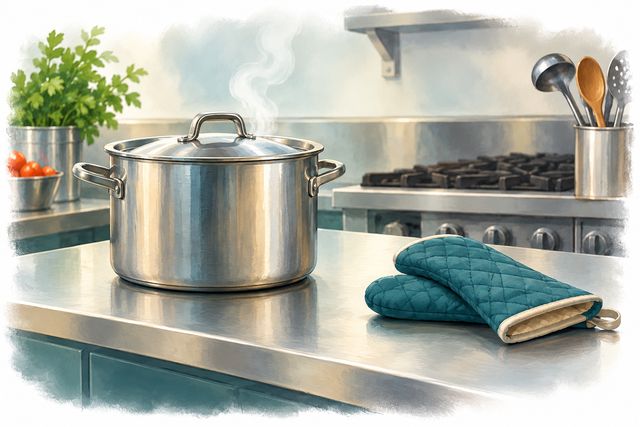
The soup is ready, but the only mitt is damp. Would you lift it? Kitchen, banquets, laundry and stewarding staff encounter steam, hot liquids and heated equipment.
6 secondsBurn exposure at 140°F
CPSC warns that 140°F tap water can cause burns during six seconds of contact. This household-water example shows how quickly injury happens, not a safe exposure limit or a commercial equipment setting.
Before my next hot transfer, I will check protection, destination, route and assistance.
Section 2 of 4Notice warning signs

Steam escapes from lids, dish machines and beverage equipment, sometimes before you see it. Damp, damaged or wrong-purpose mitts may fail during handling. Crowded routes, heavy loads and full counters leave no safe place for a hot container.
Federal requirement: OSHA requires hand protection suitable for thermal hazards, task conditions, duration and the protection’s performance.
OSHA guidance: Keep water and ice away from hot oil. Avoid moving or straining hot oil, and follow equipment-specific training.
Section 3 of 4Choose a safer next step
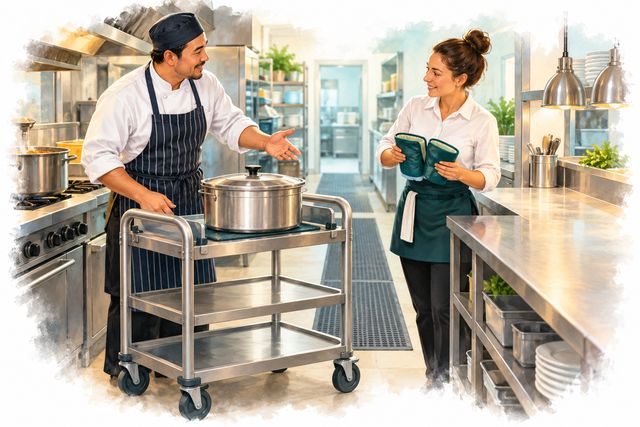
Use dry, intact, well-fitting, task-suitable protection; assume handles and trays may be hot. Clear destination and route; use an approved cart or help if you cannot control the load.
Announce movement; await acknowledgment. Avoid steam paths. Report burns promptly. Switching off does not prove equipment cool or depressurized; follow its instructions and training.
Safety boundary: During this activity, do not handle hot liquids, drain oil, release pressure or demonstrate burn treatment. It cannot replace equipment-specific training.
Section 4 of 4Practice the decision

Scenario: A server faces heavy soup, a crowded aisle, a damp mitt and a full receiving counter. What must change before anyone lifts?
Practice activity (4 min)
- Think 30 secIdentify the risk.
- Discuss 90 secAgree a safer plan.
- Compare 1 minCheck your plan below.
- Commit 1 minChoose your next-shift action.
Learner check
Based on the scenario above, what is the safest plan? Tap to reveal the answer.
Replace unsuitable protection, clear the receiving surface and route, arrange sufficient assistance and communicate before moving. Any unresolved hazard means the transfer waits.
Sources
Bonus resources
Free outside material to go deeper. These open on the publisher's site.
- Burns: Types, Symptoms, and How to HelpAmerican Red Cross · Web page (first-aid steps)