 StAI Flow
Training 08 of 30
Hand hygiene and illness prevention
Hospitality Safety Training · 08 of 30
Hand hygiene and illness prevention
10 minutes
Section 1 of 4Understand the risk
You handled trash; now you need clean breakfast cups. Where is the pause? Dirty-to-clean transitions and confidential illness reporting protect coworkers and guests.
20 secondsMinimum hand-scrubbing time in CDC guidance
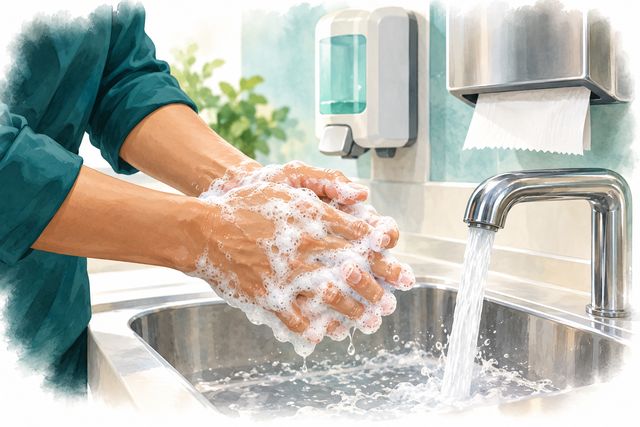
Scrub with soap for at least 20 seconds, including palms, backs, between fingers, and under nails. Then rinse and dry. Time scrubbing separately; gloves never replace washing.
I will wash between dirty and clean tasks and report illness before food work.
Section 2 of 4Notice warning signs
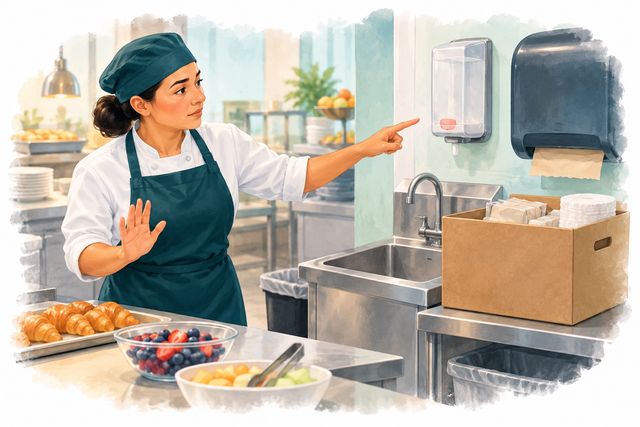
Phones, trash, toilets, linen and raw food carry germs into clean tasks. Dirty gloves, empty soap and blocked sinks undermine hygiene. Vomiting or diarrhea can signal infection despite feeling ready to work.
CDC guidance: With norovirus, avoid handling food or caring for others while sick and at least 48 hours after symptoms stop. This does not replace diagnosis-specific restrictions or required clearance.
Local rules govern food-worker reporting, exclusion and clearance; FDA’s Food Code is a model, not nationwide law.
Section 3 of 4Choose a safer next step
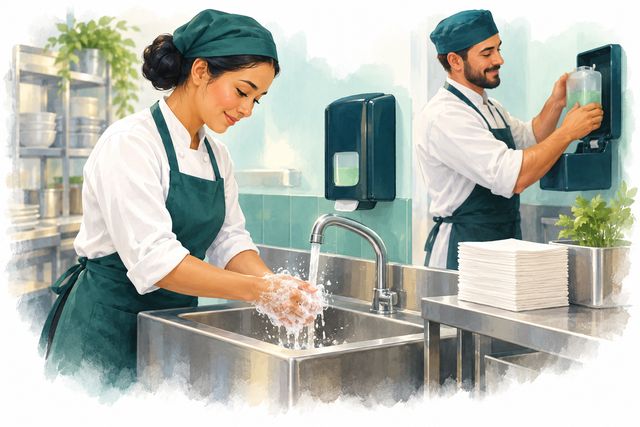
- Wash before food work or eating, after toilets or trash, and at dirty-to-clean transitions; follow department requirements.
- Wet, soap, scrub at least 20 seconds, rinse, and dry with a clean towel or air dryer.
- Report vomiting, diarrhea, and other reportable symptoms or diagnoses before food work; follow the manager’s clearance instructions.
Safety boundary: Do not diagnose illness or improvise vomit or diarrhea cleanup. Use trained responders. Keep health details private during this discussion.
Section 4 of 4Practice the decision

Scenario: A breakfast worker reaches from trash to clean cups. They vomited overnight but feel better, offering gloves and sanitizer. Can food work start?
Practice activity (4 min)
- Think 30 secIdentify the risk.
- Discuss 90 secAgree a safer plan.
- Compare 1 minCheck your plan below.
- Commit 1 minChoose your next-shift action.
Learner check
Based on the scenario above, what is the safest plan? Tap to reveal the answer.
Pause food work; report illness and follow exclusion and clearance procedures. Feeling better, gloves, and sanitizer never replace illness precautions or required washing.
Sources
Bonus resources
Free outside material to go deeper. These open on the publisher's site.
- Fight Germs. Wash Your Hands!CDC · Short video (YouTube, official CDC channel)
- Norovirus Fact Sheet for Food WorkersCDC · One-page fact sheet (web + printable)
- Retail Food Protection: Employee Health and Personal Hygiene HandbookFDA · Web handbook with posters/forms