 StAI Flow
Training 16 of 30
Evacuation and guest assistance
Hospitality Safety Training · 16 of 30
Evacuation and guest assistance
10 minutes
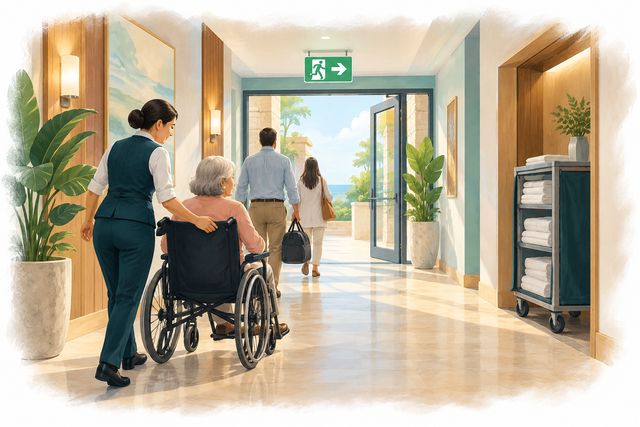
Section 1 of 4Understand the risk
A guest needs an alternative route during a wedding evacuation. What clear instruction can you give? All departments help unfamiliar guests follow the property’s approved evacuation and assistance plan.
28 inchesFederal minimum exit-access width
OSHA sets a 28-inch exit-access minimum at all points. Occupant capacity can demand more width. This never permits narrowing an approved route, judging building compliance or using an inaccessible route.
Before work resumes, I will confirm my routes, assembly point and guest-assistance contact.
Section 2 of 4Notice warning signs

Carts, banquet equipment, decorations or contractor materials can narrow exits. Guests may not understand alarms, language, layout or instructions. Unreported assistance needs, reentry for belongings and unassigned searches delay evacuation and accountability.
Federal requirement: Exit routes stay unobstructed with functioning safeguards; temporary storage is no exception. Where an emergency action plan is required, OSHA specifies reporting, evacuation, accountability, designated duties and employee review. Follow the property’s assistance plan.
Section 3 of 4Choose a safer next step
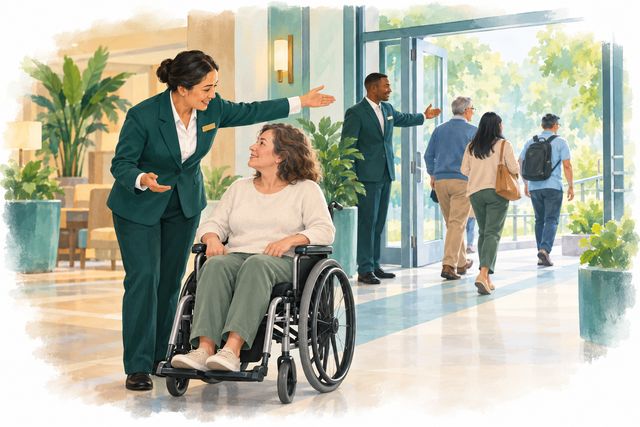
Know primary and approved alternate routes; never enter smoke. Give calm, brief directions; ask about needs. Use approved accessible-egress or refuge arrangements, not improvised lifts.
Report exact assistance locations and missing people’s last known locations; check in at assembly. Only assigned, trained staff perform plan-specific sweeps or shutdowns; others evacuate and report. Await authorized reentry.
Safety boundary: During practice, do not activate alarms, test elevators, carry or transfer people. This discussion cannot replace a coordinated drill or qualify rescue or evacuation-chair use.
Section 4 of 4Practice the decision

Scenario: A wedding evacuation begins. A guest using a mobility aid needs an alternative route. Another wants a coat. How can staff help safely?
Practice activity (4 min)
- Think 30 secIdentify the risk.
- Discuss 90 secAgree a safer plan.
- Compare 1 minCheck your plan below.
- Commit 1 minChoose your next-shift action.
Learner check
Based on the scenario above, what is the safest plan? Tap to reveal the answer.
Follow approved safe routes and assistance arrangements. Give clear directions, relay exact locations and account for people without unauthorized reentry or improvised rescue.
Sources
Bonus resources
Free outside material to go deeper. These open on the publisher's site.
- Emergency Evacuation Planning Guide for People with DisabilitiesNFPA · Free PDF guide with checklist
- How to Plan for Workplace Emergencies and Evacuations (OSHA 3088)OSHA · PDF booklet