 StAI Flow
Training 11 of 30
Food time and temperature
Hospitality Safety Training · 11 of 30
Food time and temperature
10 minutes
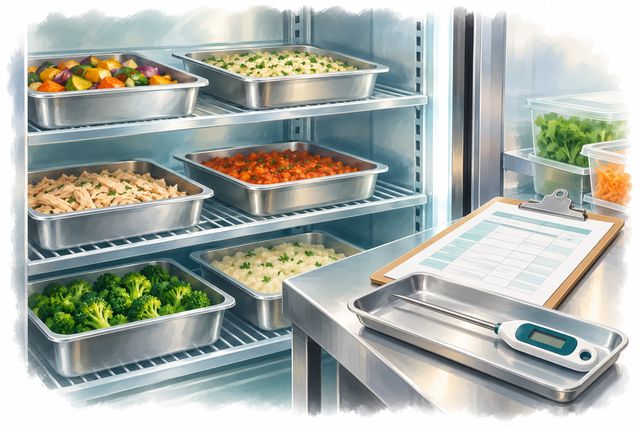
Section 1 of 4Understand the risk
The banquet soup reads 46°F, but its time record is missing. Can anyone promise it is safe? Kitchen, banquet and room-service teams must pass food and its time-temperature history together.
2 / 6 hoursStandard two-stage cooling clock
FDA’s 2026 model method cools cooked TCS food from 135°F to 70°F within two hours, then to 41°F or below within six hours total. Regulatory-approved alternatives have specified controls. Local adoption determines enforceable requirements.
Section 2 of 4Notice warning signs
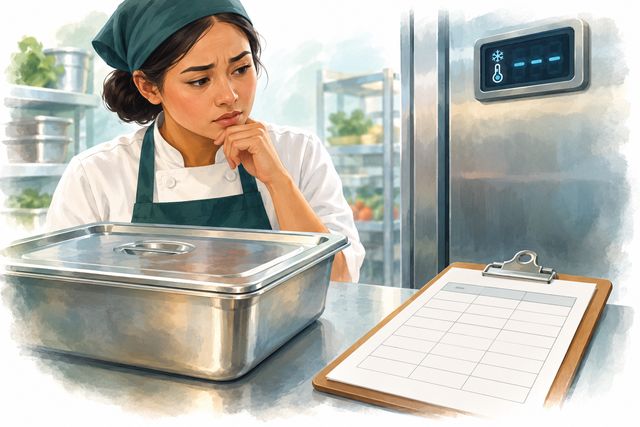
Refrigerator displays measure air, not food. Deep, tightly covered food may cool too slowly without monitoring. Missing batch times or unknown buffet or delivery history prevents a reliable safety decision.
FDA’s 2026 Food Code is a model, not nationwide law; follow local code and approved site procedures. General model TCS holding: cold at 41°F or below; hot at 135°F or above. Exceptions need approved procedures.
135°F is not a universal cooking temperature; use the approved food-specific cooking and reheating chart.
Section 3 of 4Choose a safer next step
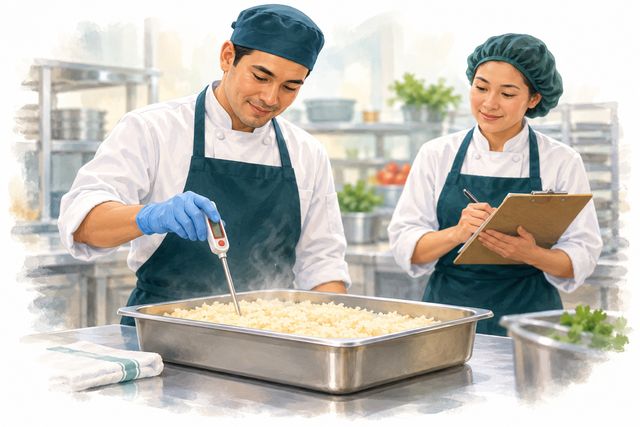
Use an accurate food thermometer; follow training for cleaning, sanitizing, placement and calibration. Record actual batch readings and times.
Use approved shallow portions and ventilation, protecting food from contamination. Check cooling before deadlines; hand over records. If limits or history are uncertain, stop service and contact the person in charge. Never taste-test or improvise reheating.
Safety boundary: This activity involves no food preparation or service. It cannot authorize specialized processes or replace food-handler training, validated recipes or local requirements.
Section 4 of 4Practice the decision
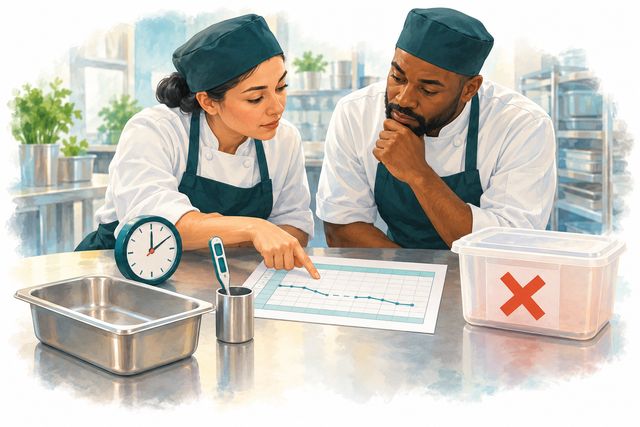
Scenario: Rice is 135°F at noon, 70°F at 1 p.m. and next recorded at 41°F at 6:30 p.m. Does this establish compliant standard cooling?
Practice activity (4 min)
- Think 30 secIdentify the risk.
- Discuss 90 secAgree a safer plan.
- Compare 1 minCheck your plan below.
- Commit 1 minChoose your next-shift action.
Learner check
Based on the scenario above, what is the safest plan? Tap to reveal the answer.
The deadline is 6 p.m. The record cannot establish timely cooling. Withhold the batch and obtain the person in charge’s approved corrective-action decision.
Sources
Bonus resources
Free outside material to go deeper. These open on the publisher's site.
- Cook to a Safe Minimum Internal Temperature (chart)FoodSafety.gov (HHS/USDA) · One-page chart
- Safe Minimum Internal Temperature ChartUSDA Food Safety and Inspection Service · One-page chart