 StAI Flow
Training 30 of 30
Winter readiness and cold stress
Hospitality Safety Training · 30 of 30
Winter readiness and cold stress
10 minutes

Section 1 of 4Understand the risk
A night porter is sent outside to clear a guest route before arrivals. What needs to be ready before the work starts? Cold, wind and wet clothing can cause dangerous heat loss, even without extreme temperatures.
Plan the work with the site lead: check conditions, choose a safe route, arrange trained help and warm breaks. Dry layers, protected hands and feet, and spare clothing support the plan; clothing alone does not make every task safe.
Section 2 of 4Notice warning signs
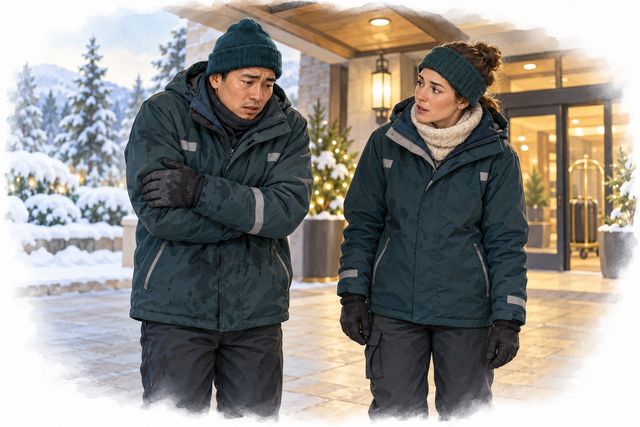
Shivering, unusual tiredness or fumbling hands need attention. Confusion, slurred speech or poor coordination after cold exposure may signal hypothermia. Numbness or pale, firm skin may signal frostbite.
Wet gloves, rising wind, icy routes and prolonged exposure can make a routine job unsafe. Snow shoveling also adds physical strain. Report changing conditions; do not wait for a temperature threshold or a coworker to collapse.
Section 3 of 4Choose a safer next step

Stop exposed work. For suspected hypothermia, call 911 immediately and follow dispatcher instructions. Reach warmth safely; keep the person warm, dry and accompanied. Notify the site lead without delaying emergency help.
For suspected frostbite, get medical help; do not rub, apply direct heat or attempt thawing yourself. Replan outdoor tasks with suitable clothing, warm breaks, help and a treated route.
Safety boundary: Discussion only: No cold exposure, snow clearing or first-aid demonstration. Leave roof, tree and power-line hazards to authorized specialists.
Section 4 of 4Practice the decision

Scenario: A porter in wet gloves starts fumbling keys and slurring words. A colleague wants to finish the icy route first. What takes priority?
Practice activity (4 min)
- Think 30 secIdentify the risk.
- Discuss 90 secAgree a safer plan.
- Compare 1 minCheck your plan below.
- Commit 1 minChoose your next-shift action.
Learner check
Based on the scenario above, what is the safest plan? Tap to reveal the answer.
Stop work, call 911 for suspected hypothermia, reach warmth safely and stay with the porter. Follow emergency instructions. Keep guests off the icy route and arrange trained help; finishing the job can wait.
Sources
Bonus resources
Free outside material to go deeper. These open on the publisher's site.
- Winter WeatherReady.gov (FEMA) · Web page with checklist
- Power Outage SafetyAmerican Red Cross · Web page (checklist)