 StAI Flow
Training 28 of 30
Hotel guest and property security
Hospitality Safety Training · 28 of 30
Hotel guest and property security
10 minutes
Section 1 of 4Understand the risk
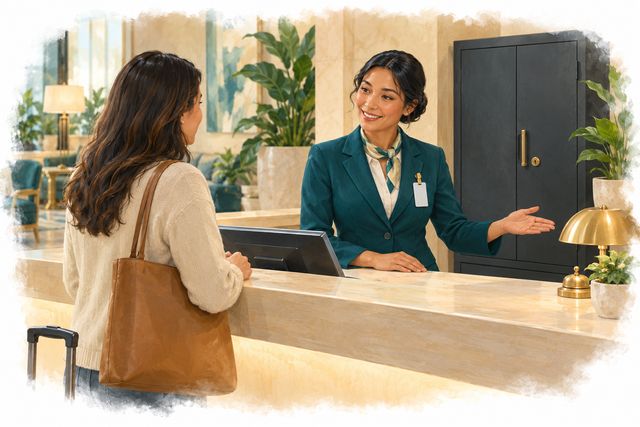
A colleague asks to borrow your staff key to save a trip to reception. What could that unlock? Guest rooms, luggage stores and service areas need controlled access.
Follow the hotel’s key issue, return and identity-check process; use only access assigned to you. Keep keys secure and report a lost key or access card promptly. These are protective routines, not permission to search guests or investigate people.
Section 2 of 4Notice warning signs
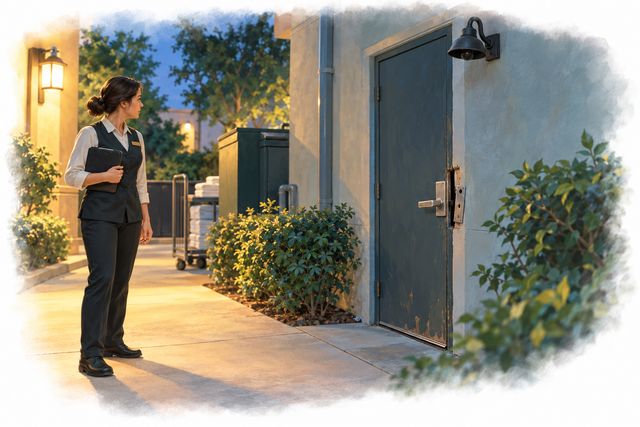
Notice doors that do not latch, damaged locks, missing keys and failed exterior lighting. Include entrances and staff parking routes in your report. Report a propped staff door or someone trying to bypass an access check.
Describe the action, place and time; do not assume intent. Appearance, race, nationality, religion or gender is not evidence of wrongdoing. A familiar face or confident request does not replace the hotel’s access procedure.
Section 3 of 4Choose a safer next step
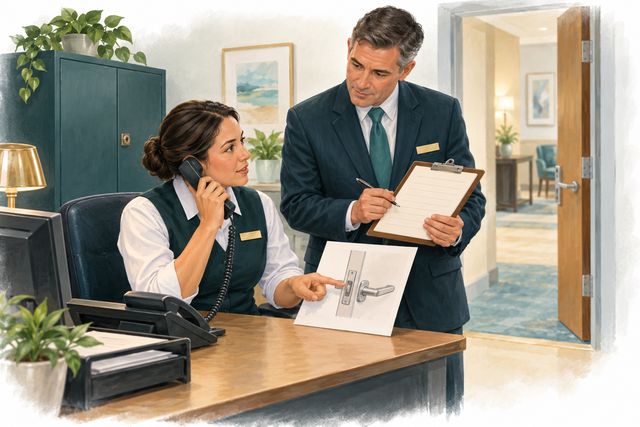
- Keep staff keys secure; never lend them or grant access outside your role. Route access requests through the approved identity check. Report defects and lost keys promptly to security or the duty manager; leave repairs to authorized staff.
- Keep exits usable; never add makeshift locks. If behavior concerns you, step away and report facts without confronting, following or searching anyone. Call 911 from safety for immediate danger.
Safety boundary: Discussion only: Do not test real locks or challenge people.
Section 4 of 4Practice the decision

Scenario: A service door is propped open. Someone asks for your staff key to collect a bag. What changes?
Practice activity (4 min)
- Think 30 secIdentify the risk.
- Discuss 90 secAgree a safer plan.
- Compare 1 minCheck your plan below.
- Commit 1 minChoose your next-shift action.
Learner check
Based on the scenario above, what is the safest plan? Tap to reveal the answer.
Do not lend the key or grant unverified access. Refer the request to reception and report the door. Keep exits usable; step away from danger without confrontation.
Sources
Bonus resources
Free outside material to go deeper. These open on the publisher's site.
- Human Trafficking Response Guide for the Hospitality IndustryDHS Blue Campaign · 10-page PDF guide by role
- Trafficking PreventionAmerican Hotel & Lodging Association (AHLA) · Web page